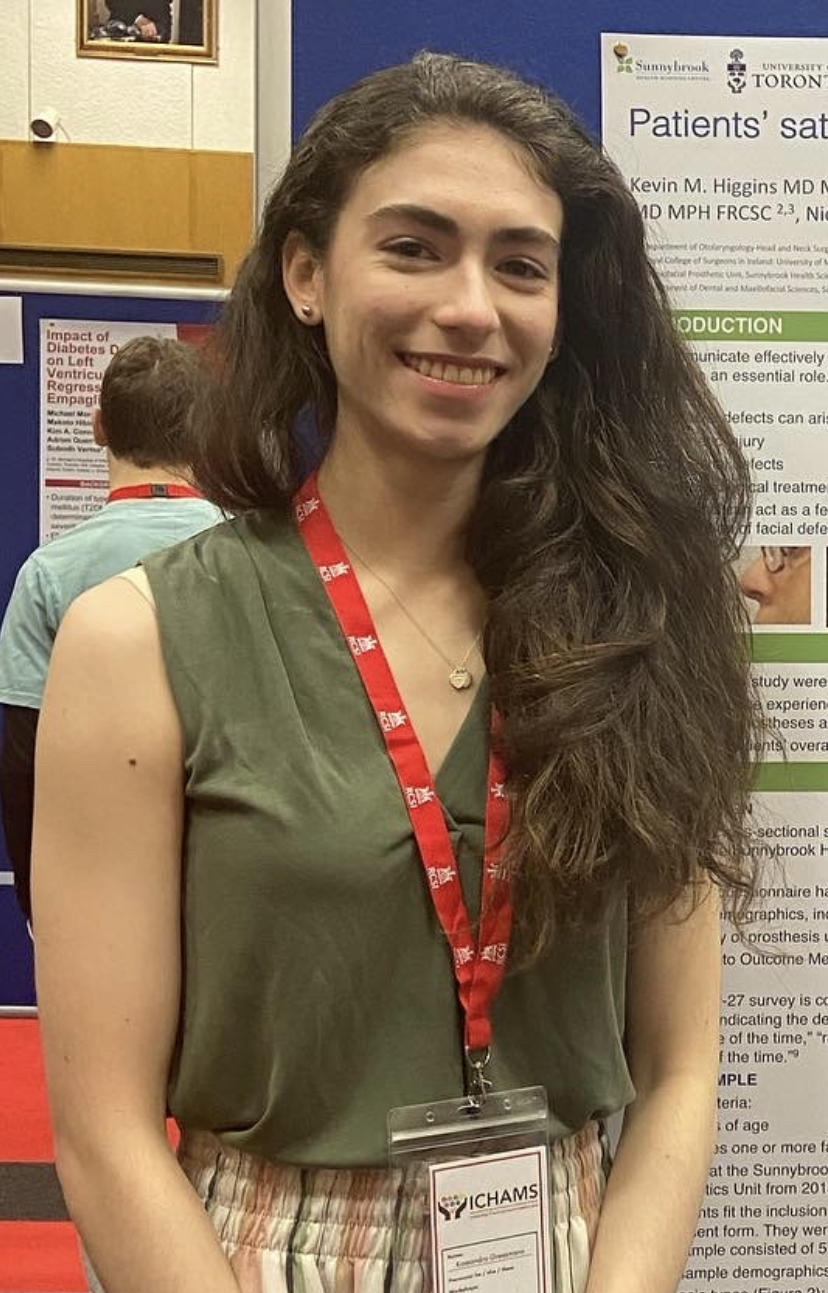
Trainee Spotlight: Ms Kassandra Gressmann, ST2 Trainee


Ms Kassandra Gressmann, ST2 Trainee at the Royal College of Surgeons in Ireland, gives us insight into the surgical training programme, what a day as an ST2 looks like, and how she balances training and mental health. 


Ms Kassandra Gressmann, ST2 Trainee at the Royal College of Surgeons in Ireland


Can you tell us a little about yourself and why did you choose surgery as a career?

I’m a Canadian who moved to Ireland to attend medical school in the Royal College of Surgeons in Ireland, and stayed in Ireland for my surgical training. I was always interested in the surgical field and participated in shadowing days and research in different surgical specialties. The more I learnt about the surgical field, the more I was certain it was the career path for me.


Training & Experience


What has been the most challenging aspect or your surgical training?

The most challenging aspect of surgical training is the vast amount of knowledge you have and want to continuously learn. This takes a lot of time outside of work hours when you’re already very busy!


Can you describe a typical day as an ST2 trainee?

A typical day as an ST2 trainee starts with the daily ward round of all inpatients with the team and establishing what needs to be done for their care. If the day involves a surgical list, the SHO then will then admit and ensure all elective patients are prepped for surgery. If the day involves clinic, the SHO will review patients and discuss with the senior team for their future care.


What has been the most rewarding time over the past 2 years?

The most rewarding times over my surgical training are times when I have performed a surgical procedure independently. No matter how small the procedure, it takes several times watching, assisting, and performing under supervision before you feel confident enough to perform it on your own. It’s always a massive achievement for surgical trainees.


Skills & Growth


What are the key skills that you think every surgical trainee needs to develop?

Every surgical trainee needs to continue to develop and practice their surgical skills. You can always improve no matter at what level of experience, and it’s important to always aim to improve your skills.


How has your confidence as a surgeon evolved since you started training?

When I started surgical training, the expanse of knowledge to learn felt very intimidating. I found my confidence continues to evolve when I see how my knowledge improves with every new patient that I review.


Can you share a case or experience that had a significant impact on you?

My experiences shadowing in surgery as a medical student had a significant positive impact on me. When surgical mentors would teach me practical and knowledge skills, it further encouraged me to aim for a career in surgery. They helped me to gain confidence that I could follow this career path.


Mentorship & Support


What advice would you give to medical students considering surgical training?

Medical students interested in surgical training should aim to expose themselves to surgery by shadowing surgical trainees as much as possible. This is the best way to understand what being a surgeon will entail.


How do you support your fellow trainees in difficult times?

All surgical trainees are very supportive of one another. We understand that things can feel overwhelming, but we have all been in that position previously. We help each other with small jobs and cover each other wherever possible, because we always want each other to succeed.


Work-Life Balance & Well-being


What strategies do you use to maintain your well-being and mental health?

I try to maintain my well-being by doing fun activities outside of work. It can be hard to feel separated from work even when I’m not working. I find that creating small plans allows me to keep many interests outside of surgery, and allows me to focus on surgical training better when I’m in work.


Final Thoughts


What’s one piece of advice you wish you had received before starting training?

The advice I wish I had received before starting training would be to talk with handover surgical teams before switching jobs to better understand a new hospital’s administrative system. Learning a new hospital can feel overwhelming, so if someone can briefly explain it further in advance, you feel more prepared to enter a new hospital.


If you could give one message to first year trainees, what would it be?

I would encourage first year trainees to be as open-minded as possible to all surgical specialties. Most trainees have a good idea of what surgical subspecialty they want to pursue, but I’ve known several trainees who have changed their minds. If you remain open-minded, you may find a subspecialty you prefer! It will also help you to learn more about all specialties, and make you a more well-rounded surgeon.


What’s next for you?

As an ST2 trainee, I will be applying for the HST scheme this year. The application and preparation is my biggest focus for this year!
 
 
Core Surgical Training Applications Now Open | Please share with your network


Applications for the Core Surgical Training Programme are now open for 2026 intake. Find out more here


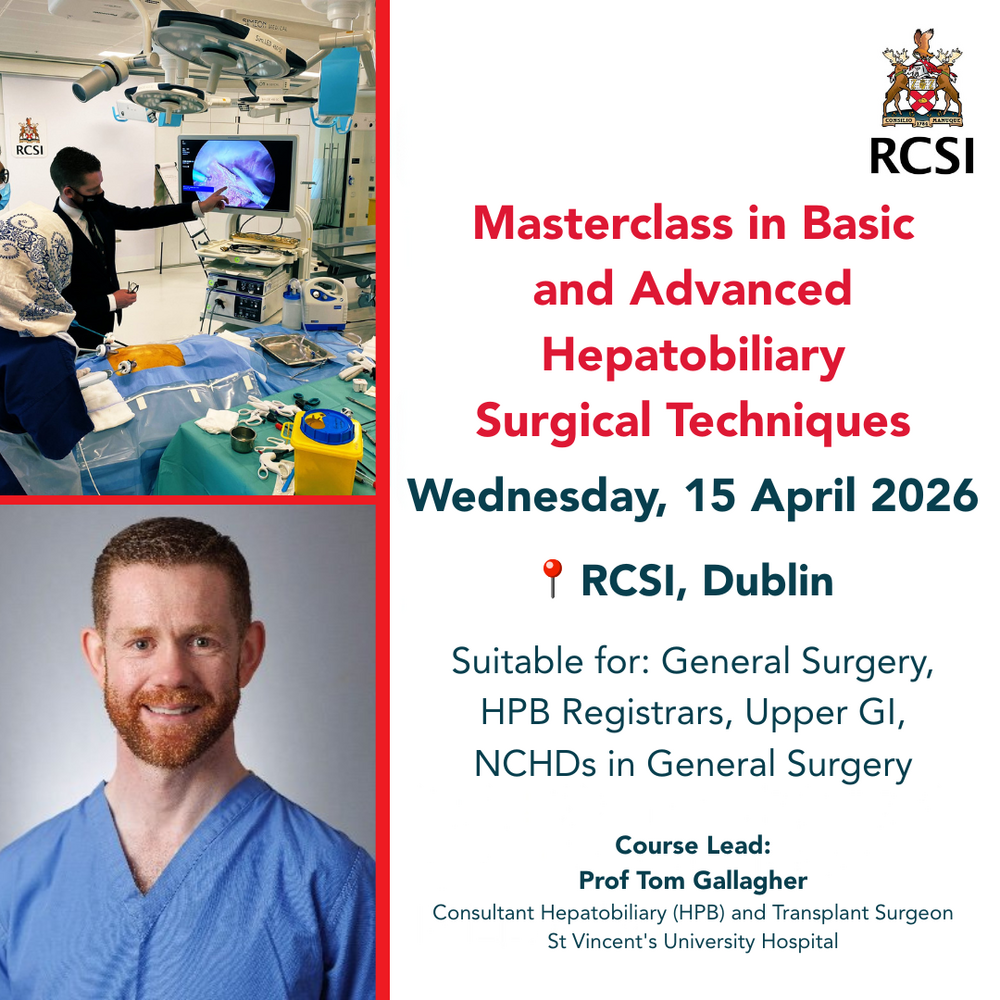
Masterclass in Basic and Advanced Hepatobiliary Surgical Techniques
Wednesday, 15 April 2026


Join RCSI on Wednesday, 15 April 2026 for our Masterclass in Basic and Advanced Hepatobiliary Surgical Techniques aimed at HPB Registrars, General Surgeons and Surgical NCHDs who have completed at least two years of surgical training.


Join RCSI on Wednesday, 15 April 2026 for our Masterclass in Basic and Advanced Hepatobiliary Surgical Techniques aimed at HPB Registrars, General Surgeons and Surgical NCHDs who have completed at least two years of surgical training.


This course is being led by Professor Tom Gallagher, Consultant HPB Surgeon in St Vincent's University Hospital. The course will include short didactic sessions in combination with

  • Intra-operative video
  • Laparoscopic surgical techniques
  • Open HPB surgical techniques

The main focus of the masterclass will be on hands-on simulation which will be proctored by experienced HPB surgeons.


The hands-on sessions will give attendees an introduction to both advanced and basic HPB procedures including Laparoscopic cholecystectomy and Laparoscopic liver resection.


For any queries, please email cpdss@rcsi.ie or visit: https://www.rcsi.com/dublin/professional-cpd/cpdss/introduction-to-hepatobiliary-surgical-techniques/course-details


Kind regards,

RCSI Surgery


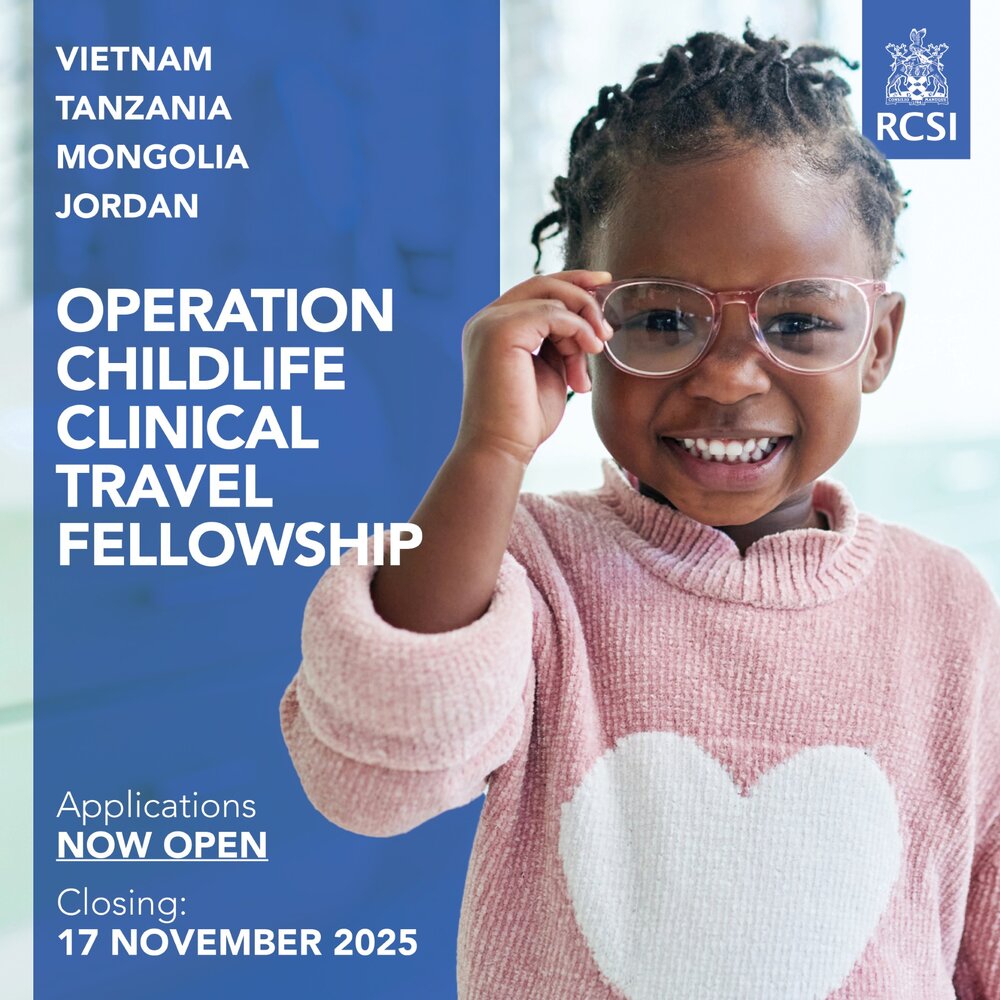
Applications now open – Operation Childlife Clinical Travel Fellowship 2026


RCSI and Operation Childlife are working together to support surgical trainees or medical professionals gain additional expertise by participating in paediatric healthcare missions, led by Irish hospital consultants, doctors and nurses who plan and deliver two-week programmes of care, with Operation Childlife in Vietnam, Tanzania, Mongolia and Jordan.


Applications now open – Operation Childlife Clinical Travel Fellowship 2026


RCSI and Operation Childlife are working together to support surgical trainees or medical professionals gain additional expertise by participating in paediatric healthcare missions, led by Irish hospital consultants, doctors and nurses who plan and deliver two-week programmes of care, with Operation Childlife in Vietnam, Tanzania, Mongolia and Jordan.


The Operation Childlife Clinical Travel Fellowship is open to RCSI Surgical and EMTrainees, RCSI Medical, Nursing and Physician Associate Graduates and other Irish-based practicing healthcare professionals in the area of care of the child.


For more information, visit: https://www.rcsi.com/surgery/training/fellowship-opportunities/operation-childlife-clinical-travel-fellowship


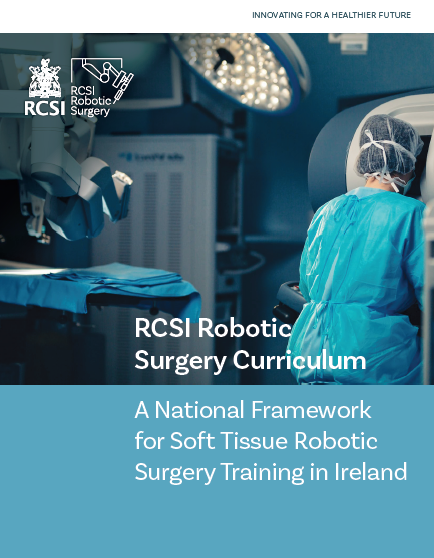
A New Era in Surgical Training: National Robotic Surgery Curriculum Ratified


RCSI is proud to announce the ratification of the National Robotic Surgery Curriculum by the Irish Surgical Postgraduate Training Committee (ISPTC) — a major milestone for surgical education in Ireland, and possibly the first fully integrated national robotic training programme in the world.


A New Era in Surgical Training: National Robotic Surgery Curriculum Ratified


RCSI is proud to announce the ratification of the National Robotic Surgery Curriculum by the Irish Surgical Postgraduate Training Committee (ISPTC) — a major milestone for surgical education in Ireland, and possibly the first fully integrated national robotic training programme in the world.


This three-year, cross-specialty programme will provide trainees with structured, incremental training in robotic surgery — progressing from foundational simulation-based skills to advanced procedural techniques, using both high-fidelity and tissue models. It integrates non-technical skills such as human factors, communication, and teamwork, and ensures minimum simulator hours are completed and verified. Each phase includes robust assessment and certification, ensuring readiness for clinical practice.


This national framework guarantees that all trainees are equipped with the essential foundations to perform robotic surgery safely and effectively, regardless of platform or specialty.


Special thanks to Mr. Kieran Ryan, Managing Director of Surgical Affairs, whose vision and leadership were instrumental in making this programme a reality. We also gratefully acknowledge the support of Professor Cathal Kelly, CEO of RCSI, in championing this bold and future-focused direction for surgical training.


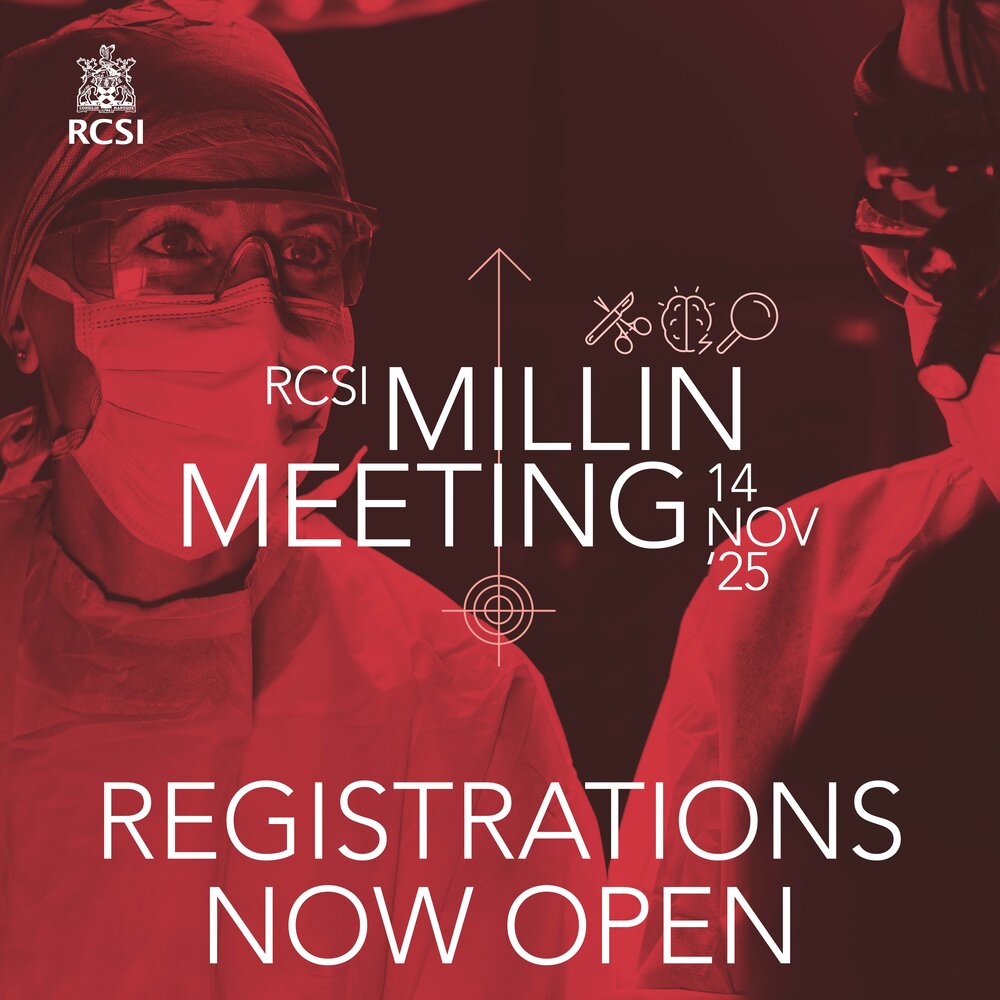
2 Weeks To Go | RCSI Millin Meeting 2025 


Please note that registrations are now open for RCSI’s established RCSI Millin Meeting which will take place on Friday, 14 November 2025. 


Theme: Shaping Future Surgical Research and Training 

Please note that registrations are now open for RCSI’s established RCSI Millin Meeting which will take place on Friday, 14 November 2025. 

The Millin will focus on surgical research and training, with an eye to topical issues. For surgical trainees, the meeting will provide important insights about how to develop better academic research skills and how to integrate research into the surgical career path in a way that supports your career goals.  

For surgical researchers, the update from the National Surgical Research Support Centre and the competition for the RCSI National Surgical Research Medal will be of particular interest. For consultants and surgical trainers, the morning session will update on the supports available to improve the quality of research in your department, both for your trainees but also showing ways to assist you in increasing your professional networks and collaborations.    


Calling all Surgical Researchers, Consultants and Trainees – RCSI Millin Meeting 2025


RCSI is delighted to announce that our two keynote lectures for this year’s Millin meeting will be delivered by:  

  • Professor Shirley Potter, Consultant Plastic & Reconstructive Surgeon, St James’s Hospital & Blackrock Clinic; Clinical Professor, School of Medicine, University College Dublin; National Training Programme Director, Plastic & Reconstructive Surgery, RCSI   

Topic – The Future of the Clinician Scientist 


  • Professor Declan Devane, Professor of Health Research Methodology and Deputy Dean of the College of Medicine, Nursing and Health Sciences, University of Galway 

TopicBetter Trials, Better Evidence: Innovations in Trials Methodology 


  • Professor Jennifer Cleland, Lee Kong Chian (LKC) School of Medicine, Singapore and Royal College of Surgeons of Edinburgh, UK 

Topic– Evidence-Based Surgical Training 


  • Professor Mary Dixon-Woods, Director of The Healthcare Improvement Studies (THIS) Institute, University of Cambridge 

Topic - An Evidence-Based Approach to Improving and Innovating in Surgery 

Best regards, 

Royal College of Surgeons in Ireland 


Online PG Diploma/MSc in Human Factors in Patient Safety
Register your interest


RCSI is pleased to announce that we have now opened expressions of interest (September 2026 intake) for our inter-disciplinary and global online PG Diploma in Human Factors in Patient Safety.


RCSI is pleased to announce that we have now opened expressions of interest (September 2026 intake) for our inter-disciplinary and global online PG Diploma in Human Factors in Patient Safety.


Scholars on our fully-flexible programme have gained a comprehensive set of knowledge and core competencies within Human Factors in Patient Safety which have led to scholars gaining new Human Factors specific roles, working on new healthcare projects within clinical practice and pro-actively implementing systematic workplace changes to the benefit of patient care.


Scholars from a diverse range of healthcare backgrounds will attend online interactive sessions and workshops one day per month. The rest of the multi-disciplinary programme including didactic teaching, discussion boards, reading, and resources are offered online, which you can access in your own time.


To register your interest, please click here


Kind regards,

RCSI Surgery


MRCS Part A January 2026 - Applications Closing Today


Applications for our upcoming MRCS Part A January 2026 diet will close today, Thursday 30 October 2025.


Applications for our upcoming MRCS Part A January 2026 diet will close today, Thursday 30 October 2025.


Candidates sitting the MRCS Part A January 2026 Diet with RCSI will receive an array of resources to help you pass the examination including: 

  • Free access to our exclusive Affiliate Membership with 100+ resources 

  • Free access to TeachMe Surgery and TeachMe Anatomy with over 2000+ Mock MCQs and revision guides 

  • 15% off MRCS Part A Pastest Resources 

  • And More 


For any queries, please email surgerymarketing@rcsi.ie 


Kind regards, 

Royal College of Surgeons in Ireland 


Beyond the Theatre Podcast | Professor Shirley Potter
Robotic Surgery News, Events and Courses


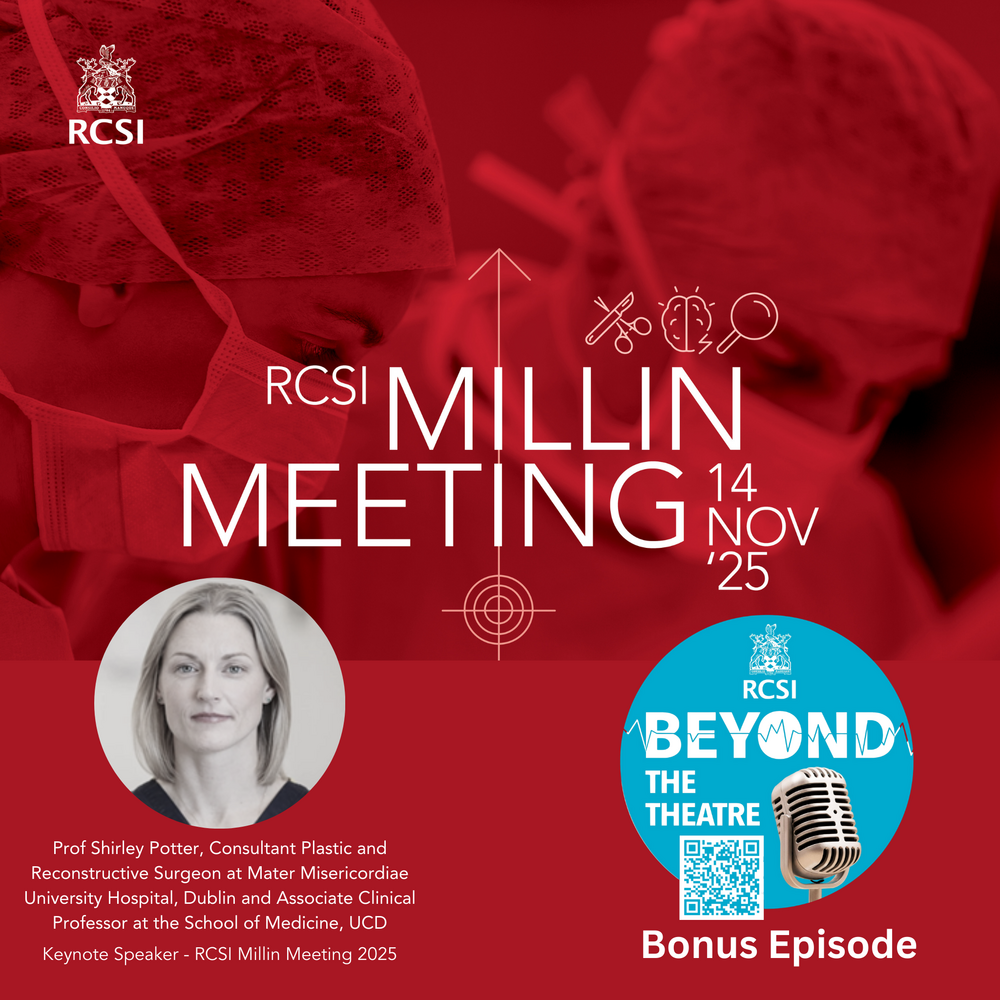
The Royal College of Surgeons in Ireland is pleased to announce that our Bonus Millin Meeting episode featuring Professor Shirley Potter is out now.


The Royal College of Surgeons in Ireland is pleased to announce that our Bonus Millin Meeting episode featuring Professor Shirley Potter is out now.


In this bonus episode, Dr Conor Toale, Higher Surgical Trainee in General Surgery speaks with an RCSI Millin Meeting keynote speaker, Professor Shirley Potter, Consultant Plastic & Reconstructive Surgeon, St James’s Hospital & Blackrock Clinic; Clinical Professor, School of Medicine, University College Dublin. This episode gives insight into Professor Potter’s keynote lecture “The Future of the Clinician Scientist”.


Listen here.


Register for RCSI Millin Meeting 2025 here.


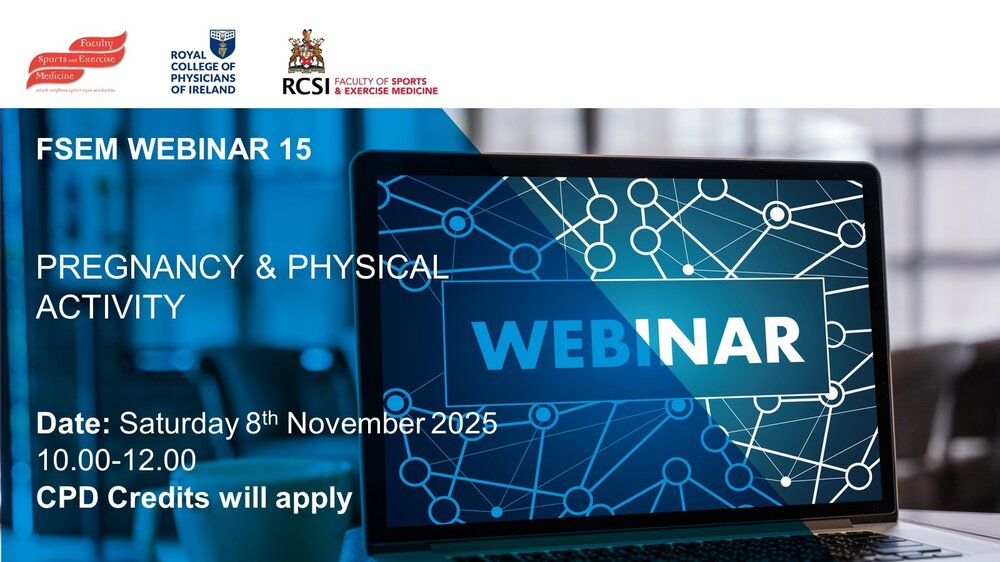
RCSI Faculty of Sports and Exercise Medicine for the upcoming webinar 'Pregnancy & Physical Activity'
Saturday, 8 November


Join the RCSI Faculty of Sports and Exercise Medicine for the upcoming webinar 'Pregnancy & Physical Activity' on Saturday, 8 November from 10.00am to 12.00pm, online.  This webinar will be co-chaired by Prof Wilby Williamson, Consultant in Sports and Exercise Medicine, & Professor of Physiology, Trinity College Dublin & Dr Frank O’Leary, Consultant Sports & Exercise Medicine Physician, UPMC Sports Surgery Clinic (UPMC SSC), Santry, Dublin.


Join the RCSI Faculty of Sports and Exercise Medicine for the upcoming webinar 'Pregnancy & Physical Activity' on Saturday, 8 November from 10.00am to 12.00pm, online.  This webinar will be co-chaired by Prof Wilby Williamson, Consultant in Sports and Exercise Medicine, & Professor of Physiology, Trinity College Dublin & Dr Frank O’Leary, Consultant Sports & Exercise Medicine Physician, UPMC Sports Surgery Clinic (UPMC SSC), Santry, Dublin.


To register - https://www.fsem.ie/upcoming-events/fsem-web-15-pregnancy-physical-activity/individual-registration


CPD Credits will be awarded.


A simple, structured handover system can make surgery safer


New research led by RCSI, published in JAMA Network Open, shows that a straightforward four-step handover system - SIPS (Sick patients; ISBAR; Prioritise; Summarise) - improves patient safety in surgical settings.


A simple, structured handover system can make surgery safer.


New research led by RCSI, published in JAMA Network Open, shows that a straightforward four-step handover system - SIPS (Sick patients; ISBAR; Prioritise; Summarise) - improves patient safety in surgical settings.


The study, which was supported by The MPS Foundation and Bon Secours Hospital, Dublin, was conducted across two tertiary hospitals. Through their evaluation of more than 2,200 patients, the researchers found that introducing SIPS led to:

  • Better patient vital signs at 12- and 24-hours post-handover
  • Fewer handover-related safety incidents, as reported by staff
  • No increase in handover duration, demonstrating the system’s practicality in busy clinical environments

Importantly, the SIPS system was widely adopted and sustained over time, offering strong evidence that standardising handover communication can enhance surgical safety while integrating seamlessly into routine practice.


Read the full study here