Trainee Spotlight: Ms Arielle Pierre, ST5 Trainee in the Colorectal Department


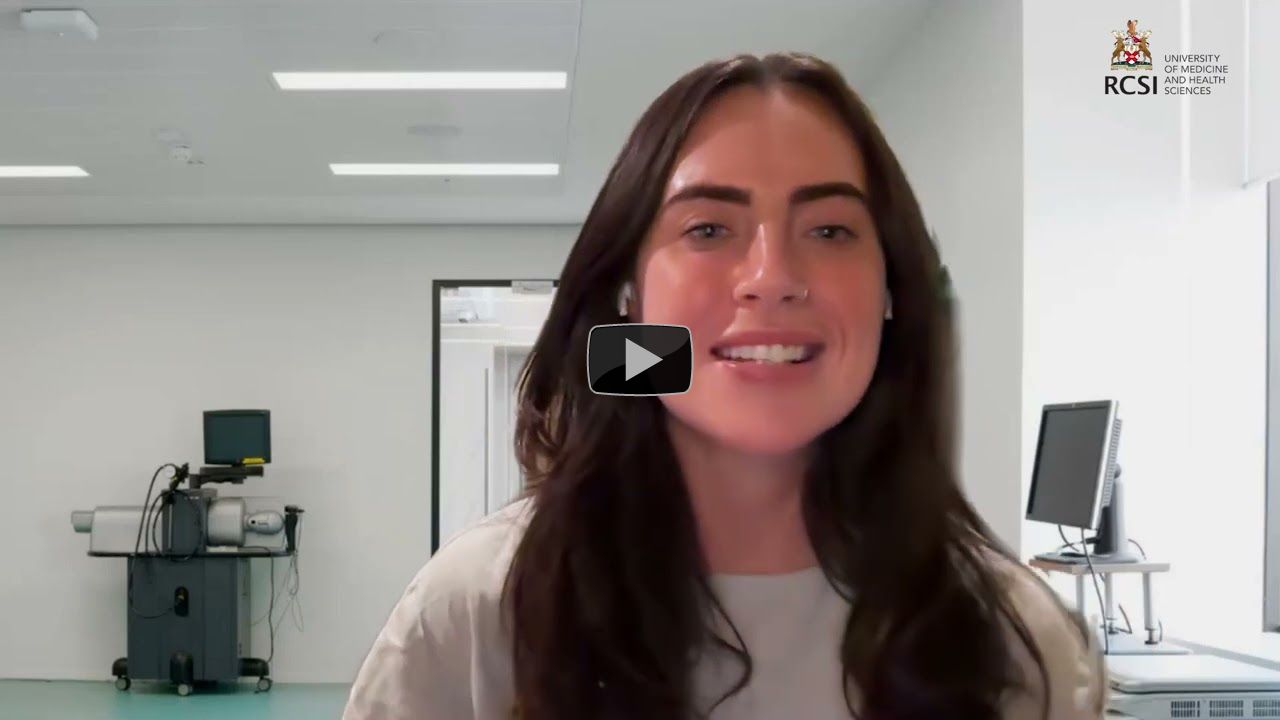
Ms Arielle Pierre, ST5 Trainee in the Colorectal Department at University Hospital Waterford gives us insight into the surgical training programme, her current colorectal surgery career, and life outside of surgery.


Ms Arielle Pierre, ST5 Trainee in the Colorectal Department at University Hospital Waterford.


Can you tell us a little about yourself and why did you choose surgery as a career?

My name is Arielle Pierre. I was born and raised in Trinidad and Tobago. In 2014, I moved to Ireland to pursue a medical degree at the Royal College of Surgeons. It was in 2019,  I graduated from the College of Surgeons with an Honours degree and completed my internship at the Saolta Hospital Network. My love for surgery and interest in a surgical career  began as early as  in medical school. In third year medical school,  I completed a research elective  with a General Surgeon at Howard University. It was a rewarding experience conducting research and attending clinical activities. My decision to pursue General Surgery was confirmed during internship following my surgical rotations in general and vascular surgery.


Why did you choose General Surgery?

I enjoy the vast number of benign and oncological surgical procedures performed by General Surgeons. It is rewarding for both the patient and surgeon when oncological resections are successful. It is an honour and privilege to accompany patients during their cancer journies from the time of diagnosis to their post operative visits in the outpatient clinic.


Training & Experience

What has been the most challenging aspect of your surgical training?

There is a steep learning curve for the acquisition of the various general surgery skills. It requires focus, dedication and resilience. As an ST5 trainee, I have learnt it is important each year to set realistic goals and create a plan on the necessary steps you will take to achieve them.


Can you describe a typical day as an ST5 trainee?

As an ST5 trainee, a typical day starts with a ward round of the inpatients. Thereafter depending on the schedule you can be in the outpatient clinic, endoscopy, theatre or the multi disciplinary meeting. If rostered on emergency call, it involves being in the emergency department supporting juniors on call or being present in the emergency theatre.


What has been the most rewarding time over the past 5 years?

Over the past five years, I have  seen progression in my surgical training. During my core surgical training, I successfully completed my membership examinations and graduated with a Masters in Surgery from NUIG. In the past two years of the higher specialist training, I have seen exponential improvement in my surgical skills as well as taken up leadership roles as the Surgical Lead NCHD as well as the lead recruiter in multicentre trials.


Skills & Growth

What are the key skills that you think every surgical trainee needs to develop?

Leadership and time management are crucial skills every surgical trainee should develop. Surgical care is delivered by teams and it is important to foster healthy relationships between seniors and juniors in order to deliver the best patient care. Time management is important. The many demands of the job require trainees to be organised and prioritise their tasks based on urgency.


How has your confidence as a surgeon evolved since you started training?

During my last year as a surgical trainee, I have seen an exponential increase in my surgical skills. The increased operative exposure has allowed me to be more confident in the operating theatre as well as in the endoscopy unit. I  had the privilege in the past two years to have two trainers who were invested in my development. As I rotate through different subspecialties, I have received  both technical and non- technical skills which are all important in my development and progression as a trainee.


Can you share a case or experience that had a significant impact on you?

Personally, in the past two years of my higher specialist training from breast surgery to upper gastrointestinal surgery, I have found being involved in the cancer journey for patients a truly rewarding experience. It is a life changing experience for patients. I believe it is an honour to serve them during such difficult times. Every patient diagnosed with cancer whom I have cared for has not only provided me an opportunity to learn oncological surgery but to appreciate how fleeting life is.


Mentorship & Support

Have you had a mentor who influenced your career? How did they shape your journey?

I am grateful to have mentors from medical school and my surgical training. In  both my core and high specialist training rotations, I have been mentored by my consultant trainers. Each trainer has uniquely provided me with both technical and non technical skills. I approach every training year and rotation with an open mind, eager to learn and acquire new skills.


What advice would you give to medical students considering surgical training?

Surgical training is gruelling but extremely rewarding. If you are passionate about a career in surgery, it is important to meet with surgical trainees and consultant surgeons to gain insight on pursuing a career in surgery. It is never too early to start developing your CV and preparing yourself to be a good candidate for surgical training. Summer electives and research programmes are great opportunities in medical school to improve your CV and get surgical exposure.


How do you support your fellow trainees in difficult times?

It is important to be a good team player. No man is an island. In difficult times, I support fellow trainees by assisting them in some of their clinical activities so they don’t feel overwhelmed or over burdened.


Work-Life Balance & Well-being

What strategies do you use to maintain your well-being and mental health?

A positive attitude always leads to positive outcomes. Despite the challenges I may be facing on a day to day basis at work, I set realistic goals, manage my time as well as delegate and ask for help appropriately.


How do you balance your personal life with the demands of surgical training?

Personally, I believe time management and organising my weekly commitments in advance allow me to ensure I have time outside of work to spend with family and friends as well as enjoy hobbies.


What do you do to relax and unwind outside of work?

I enjoy spending time with family and friends. I like to travel with my family and experience new cultures. Going to the gym has been a great outlet to focus on well- being and mental health.


Future Plans


What changes or advancements in surgery excite you the most?

The role of Artificial Intelligence in surgery is an exciting advancement. I look forward to seeing  how artificial intelligence will change the delivery of surgical care in the future.


If you could change one thing about surgical training, what would it be?

I think the implementation of a buddy system between junior and senior trainees would be of great benefit. This would allow senior trainees to provide support and mentor junior colleagues as they progress through the training programme. A designated consultant trainer assigned to a group of trainees that can provide both academic and clinical support as they progress through the training scheme would also be invaluable.


Final Thoughts

What’s one piece of advice you wish you had received before starting training?

Prior to starting surgical training, I wish I knew how quickly the years would pass. It feels like I just started my core surgical training and now I am in year 3 of my Higher Specialist Training. Therefore, my advice to others would be maximise each year, set realistic goals and create a plan to execute and achieve these yearly.


If you could give one message to first year trainees, what would it be?

Surgical Training is a marathon not a sprint. To become a skill surgeon means consistent learning and acquisition of skills over an extended period of time. It is a long term commitment which requires focus, resilience, sustained effort and discipline.


What’s next for you?

I am currently an ST5 Trainee in the Colorectal Department at University Hospital Waterford. I would like to successfully complete my Higher Surgical Specialist Training and Fellowship. I am interested in Surgical Education and would like to be involved in teaching and education.

 
 
Core Surgical Training Update: 2025 Intake


The Core Surgical Training Programme continues to go from strength to strength, reflecting our ongoing commitment to training the next generation of skilled, compassionate, and patient-focused surgeons.


The Core Surgical Training Programme continues to go from strength to strength, reflecting our ongoing commitment to training the next generation of skilled, compassionate, and patient-focused surgeons. From record-breaking application numbers to expanded training opportunities and innovative educational initiatives, these developments highlight a dynamic and growing programme dedicated to excellence in surgical education.


An increase in trainees commencing in July 2025

Following discussion with HSE National Doctors in Training and Planning (NDTP), and in line with future projected work force planning numbers, it is RCSI Surgical Affairs intention to grow the number of surgical trainees across Core and Specialty Training over the coming years. The first phase sees the expansion of Core Surgical Training (CST) which in turn will lead to an increase in trainees seeking a pathway to specialty training in 2027. Our Core Surgical Training numbers for 2025 have seen an additional 20 trainees entering into year one bringing the number appointed to 100 in July 2025. 78 Trainees are progressing to year two in July, the majority of those having been offered a place in their first choice specialty.

By 2026 it is proposed to have approximately 200 trainees across CST in years one and two annually.


Registrations now open – RCSI Millin Meeting 2025 


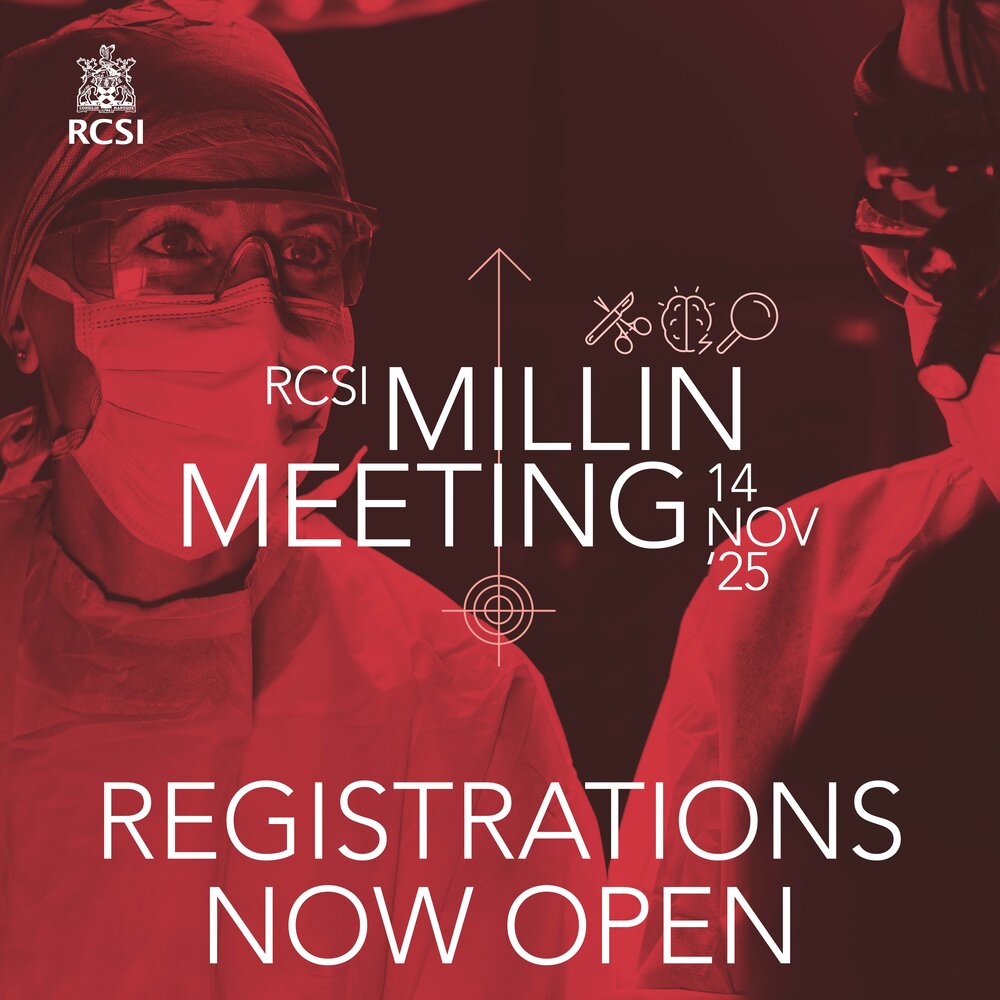
Please note that registrations are now open for RCSI’s established RCSI Millin Meeting which will take place on Friday, 14 November 2025. 


Theme: Shaping Future Surgical Research and Training 

Please note that registrations are now open for RCSI’s established RCSI Millin Meeting which will take place on Friday, 14 November 2025. 

The Millin will focus on surgical research and training, with an eye to topical issues. For surgical trainees, the meeting will provide important insights about how to develop better academic research skills and how to integrate research into the surgical career path in a way that supports your career goals.  

For surgical researchers, the update from the National Surgical Research Support Centre and the competition for the RCSI National Surgical Research Medal will be of particular interest. For consultants and surgical trainers, the morning session will update on the supports available to improve the quality of research in your department, both for your trainees but also showing ways to assist you in increasing your professional networks and collaborations.    

RCSI is delighted to announce that our two keynote lectures for this year’s Millin meeting will be delivered by:  

  • Professor Shirley Potter, Consultant Plastic & Reconstructive Surgeon, St James’s Hospital & Blackrock Clinic; Clinical Professor, School of Medicine, University College Dublin; National Training Programme Director, Plastic & Reconstructive Surgery, RCSI   

Topic – The Future of the Clinician Scientist 


  • Professor Declan Devane, Professor of Health Research Methodology and Deputy Dean of the College of Medicine, Nursing and Health Sciences, University of Galway 

TopicBetter Trials, Better Evidence: Innovations in Trials Methodology 


  • Professor Jennifer Cleland, Lee Kong Chian (LKC) School of Medicine, Singapore and Royal College of Surgeons of Edinburgh, UK 

Topic– Evidence-Based Surgical Training 


  • Professor Mary Dixon-Woods, Director of The Healthcare Improvement Studies (THIS) Institute, University of Cambridge 

Topic - An Evidence-Based Approach to Improving and Innovating in Surgery 

Best regards, 

Royal College of Surgeons in Ireland 


100 surgical trainees take part in 13th annual RCSI Surgical Bootcamp


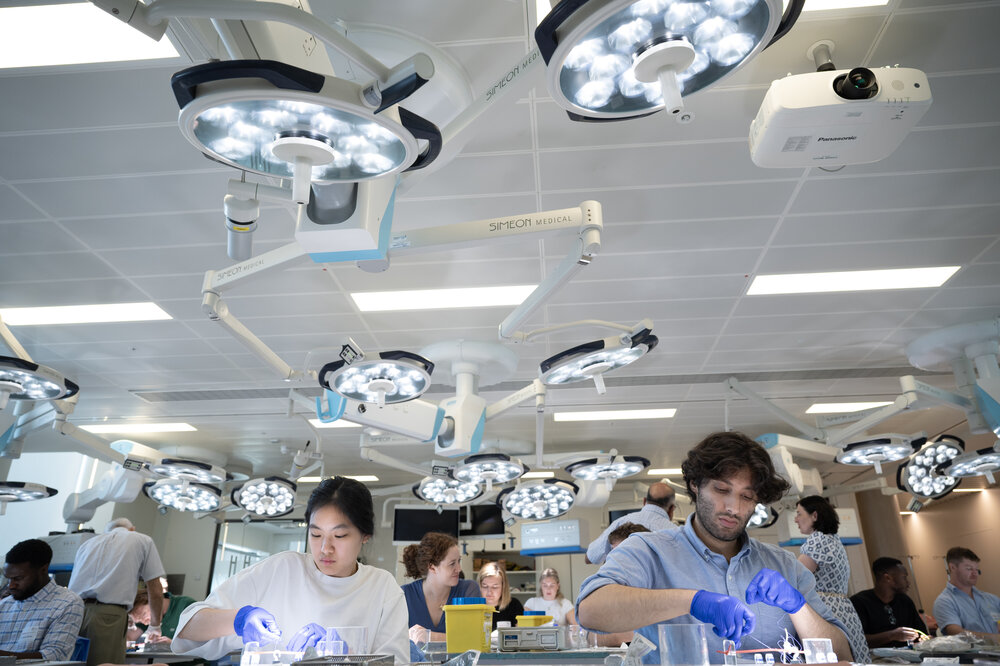
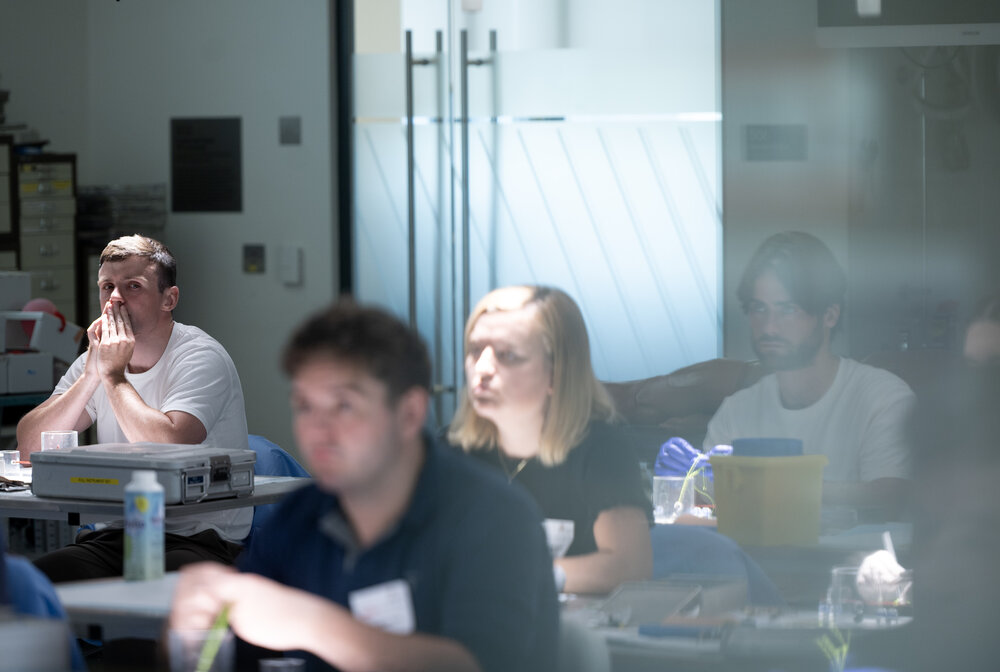
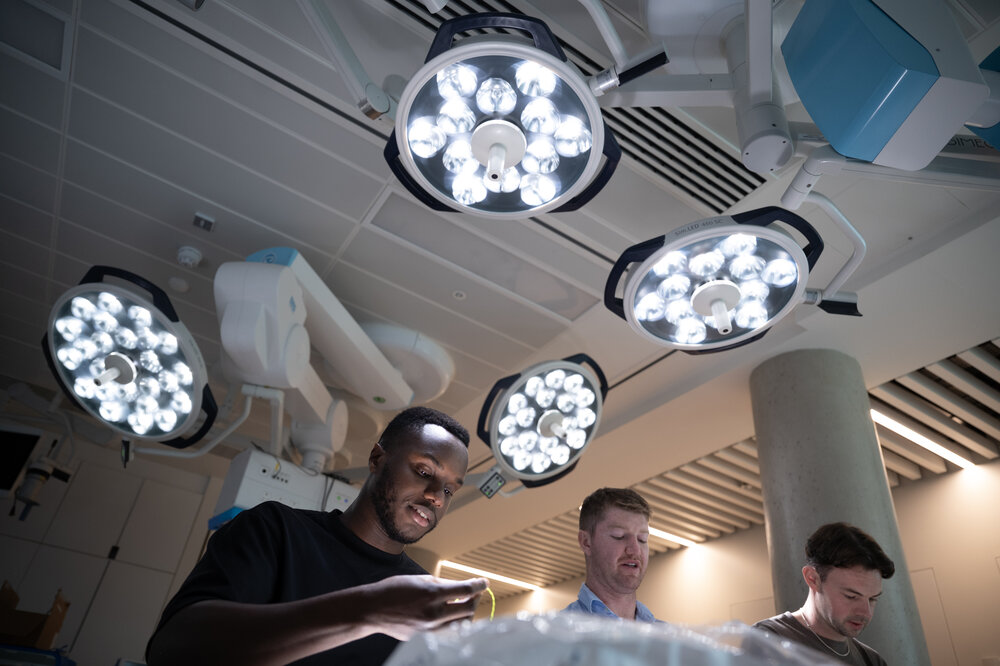
100 surgical trainees have taken part in the 13th annual Surgical Bootcamp which took place at the RCSI National Surgical and Clinical Skills Centre. The intensive course immersed the surgical trainees in the technical and non-technical skills they will need as they begin their practice as surgeons.


100 surgical trainees have taken part in the 13th annual Surgical Bootcamp which took place at the RCSI National Surgical and Clinical Skills Centre. The intensive course immersed the surgical trainees in the technical and non-technical skills they will need as they begin their practice as surgeons.

Launched in 2013, the programme was developed by RCSI based on feedback from consultant surgeons and surgical trainees and is designed to better prepare trainees for their early clinical rotations.

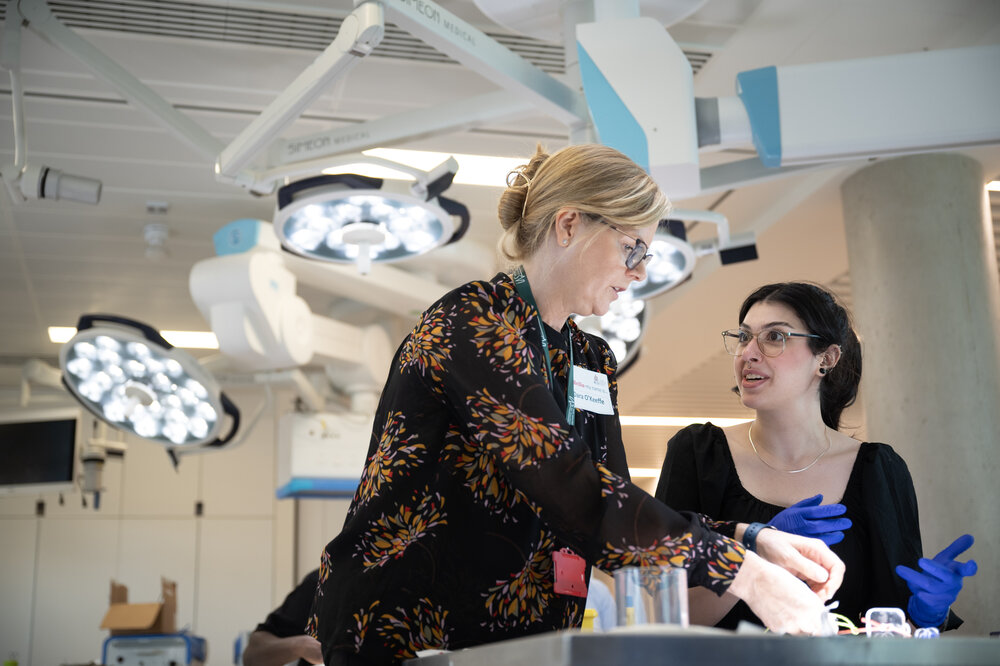
This year’s programme was supported by over 40 faculty members from across a range of surgical specialities and emergency medicine, led by Opens in new windowMs Dara O’Keeffe, Simulation Lead in Postgraduate Surgical Education. Administrative support was provided by the Core Surgical Training and Education team with technical support from RCSI’s Simulation team.

Ms O’Keeffe said: "Bootcamp 2025 has been a tremendous success. This innovative and hands-on programme is delivered by the team at Surgical Affairs, the Simulation team and our consultant surgeon trainers who, year after year, demonstrate unwavering commitment and enthusiasm. Technical skills including suturing, excision of skin lesions, bowel anastomosis and laparoscopic skills, to name a few, were taught by experienced surgical faculty in a high pupil-to-teacher ratio.

"Non-technical skills including teamwork, communication for informed consent and crisis management were also taught using interactive discussion sessions and high-fidelity simulation. The format of the bootcamp ensures close feedback and guidance as these trainees learn new skills essential to surgical practice. All sessions were delivered in the state-of-the-art training facility at 26 York Street, with online work provided pre and post course to reinforce the in-person training."

RCSI increased core surgical training numbers from 80 to 100 trainees for the July 2025 intake, reflecting workforce demands across the healthcare system. The successful running of the annual Surgical Bootcamp programme builds the surgical foundations for trainees and prepares them for their clinical rotations.


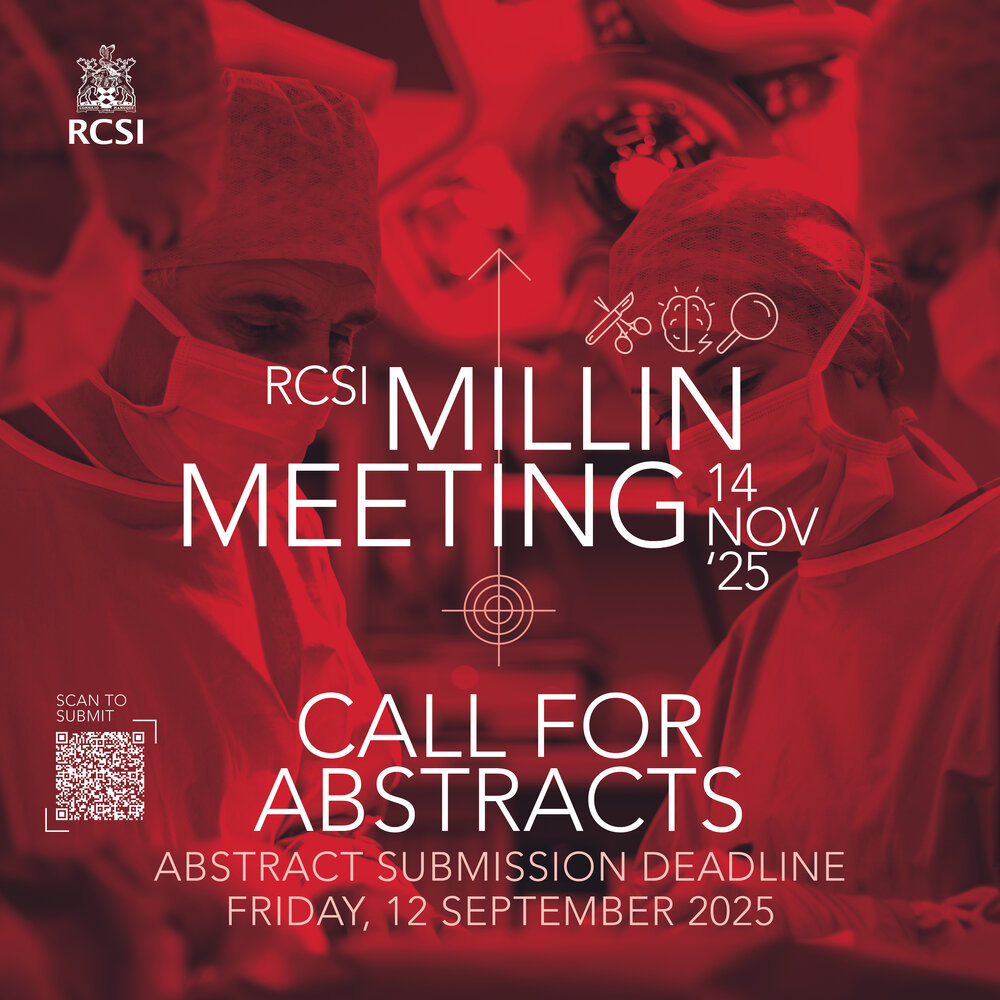
Call for Abstracts Now Open - RCSI Millin Meeting 2025


The RCSI National Surgical Research Support Centre (NSRSC) will host the Millin meeting Research symposium to share its vision for shaping the future of surgical research in Ireland. 


The RCSI National Surgical Research Support Centre (NSRSC) will host the Millin meeting Research symposium to share its vision for shaping the future of surgical research in Ireland. 


We strongly encourage surgical trainees, NCHDs and early career surgeons from all specialties to submit your abstract to showcase your research and compete for the RCSI National Surgical Research Medal. 


Abstract submission is now open and the deadline for submission is 12 September 2025. Successful submissions will be invited to present their work at the conference. 


Key dates: 

  • Millin meeting: Friday, 14 November 2025 

  • Abstract submission deadline:  Friday, 12 September 2025 

  • Abstract outcome notification:  Friday, 3 October 2025 


To submit your abstract, please fill out our Call for Abstract submission form.

For any queries, please email NSRSC@rcsi.ie 

Best regards, 

Royal College of Surgeons in Ireland & the NSRSC 

_______________________________

For updates follow the NSRSC on 

X: @RCSI_NSRSC

Instagram:  nsrsc_rcsi 


Surgical Trauma Training Programme


The course involves a series of lectures on Moodle together with a course eHandbook which exactly mirrors the Moodle lectures followed then by an intensive day-long hands-on session.


Dear Fellow Trainers


As most of you will know, new ISCP HST curricula were introduced in July 2021 which once again emphasised the importance of emergency surgical competencies (trauma and non-trauma) for practitioners on general emergency take. It was pointed out that emergency surgery ‘is not simply elective surgery performed out of hours’. The patients are different in that they may be shocked and thus physiologically compromised, the inflammatory cascade may have been activated, their medical history may be unknown etc. In addition, by its nature, trauma often occurs out-of-hours, isn’t always consultant supervised and there may be considerable interpersonal and inter-institutional variability in outcomes. While huge progress had been made in management of the cancer patient, it is generally agreed that management of the trauma patient has lagged considerably behind.


One of the other fundamental changes in the 2021 General Surgery curriculum was that training was no longer time-based but rather competency-based with ultimate responsibility resting with supervisory trainers only to sign a trainee off when they are satisfied that the trainee ‘is capable of managing the breadth of undifferentiated emergency take as a Day-1 Consultant’.


In 2018, the Irish Government launched a blueprint for the roll-out of an Irish trauma network entitled ‘A Trauma System for Ireland’ which envisaged the establishment of two Major Trauma Centres (MTCs) and ten Trauma Units (TUs).


Against this background, the College set about establishing a comprehensive foundational surgical trauma training programme to be made available in the first instance to all General Surgery HSTs. It comprises


  1. A series of didactic lectures (videos) on the College’s Moodle platform covering
  • The New Context (ISCP Curriculum, A Trauma System for Ireland, Sláintecare)
  • A walk through the Trauma Management Algorithm
  • Emergency Surgical Airway (Emergency Cricothyroidotomy)
  • Thoracic surgery for the General Surgeon
  • Trauma laparotomy – access and packing
  • Hepatic and Diaphragmatic trauma
  • Splenic trauma
  • GI (hollow viscus) trauma
  • Vascular trauma for the General Surgeon


  1. A course eHandbook which exactly mirrors the Moodle lectures and which, in addition, contains a series of Trauma Management Algorithms and a chapter on the Physiology of Trauma


  1. An intensive one-day, hands-on course in either the Wet Lab at 26 York St or in the College’s equivalent facility on the Beaumont campus.

The course has proved a huge success and while the Moodle lectures and eHandbook cannot be taken in isolation from the hands-on session as all three components comprise the training package, they can however be viewed as providing either a foretaste of the principles of surgical trauma management or for those already experienced, an aide memoire or refresher module. 


I have recently retired from all surgical activity including the role of General Surgery Lead – Trauma Education and Training and have handed on the baton to the next generation (hopefully) of surgical practitioner who will build on the foundations laid down in recent years. Mr, Sean Johnston, GSTC Chair, is holding the fort until a new Lead is appointed.


Click here to register your interest in this course.


Prof. Paul Balfe MD, FRCSI


The 5th National Human Factors in Patient Safety Conference
Friday, 26 September 2025


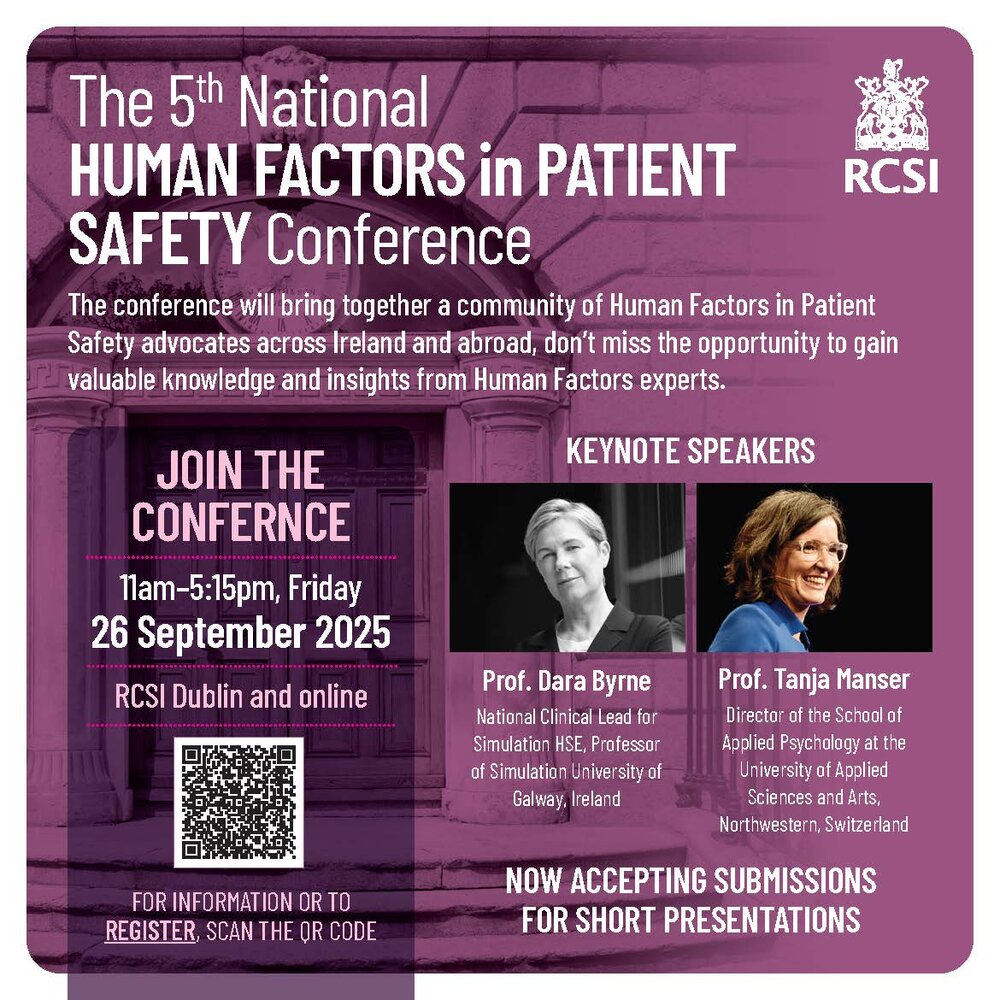
The 5th National Human Factors in Patient Safety conference will bring together a community of Human Factors in Patient Safety advocates across Ireland and abroad. Don’t miss the opportunity to gain valuable knowledge and insights from Human Factors experts. 


The 5th National Human Factors in Patient Safety Conference – Friday, 26 September 2025 


The 5th National Human Factors in Patient Safety conference will bring together a community of Human Factors in Patient Safety advocates across Ireland and abroad. Don’t miss the opportunity to gain valuable knowledge and insights from Human Factors experts. 


Speakers for our highly anticipated 5th National Human Factors in Patient Safety Conference on Friday, 26 September 2025 from 11am – 5:15pm will include: 


  • Prof. Dara Byrne, National Clinical Lead for Simulation HSE,  Professor of Simulation University of Galway  

  • Prof. Tanja Manser, Director of the School of Applied Psychology at the University of Applied Sciences and Arts Northwestern Switzerland 


We are now accepting abstracts to present at our Human Factors in Patient Safety Conference. For more information on abstract submission, please click here.  


Please note, this is a hybrid conference and you have the opportunity to attend in-person or online.  

  • Registration link - Online 


For more information, please click here. 

For any queries, please email mschumanfactorsps@rcsi.ie. 


Kind Regards, 


RCSI Human Factors in Patient Safety Team 


Applications Closing Today - September 2025 intake
Online PG Diploma in Human Factors in Patient Safety


Applications for our online PG Diploma/MSc in Human Factors in Patient Safety will close today, on 6 August. Our flexible programme is open to all professionals involved in healthcare.


Applications Closing Soon – Online PG Diploma/MSc in Human Factors in Patient Safety – September 2025 intake 


Interested in learning more about completing our PG Diploma/MSc in Human Factors in Patient Safety? Watch our current scholars Jessica, Ivan and Gabriele speak about their experience on our programme.  


RCSI Scholars | Online PG Dip/ MSc in Human Factors in Patient Safety


Our flexible programme is delivered 100% online, and attracts a wide range of healthcare professionals from around the world.  


Scholars will attend online interactive sessions and workshops one day per month. The rest of the multi-disciplinary programme including didactic teaching, discussion boards, reading, and resources are offered online, which you can access in your own time. 


Applications are currently open for September 2025 intake and will close today, 6 August 2025. Applications are accepted on a rolling basis, candidates are advised to apply as early as possible to avoid disappointment.  


To find out more, please click here.


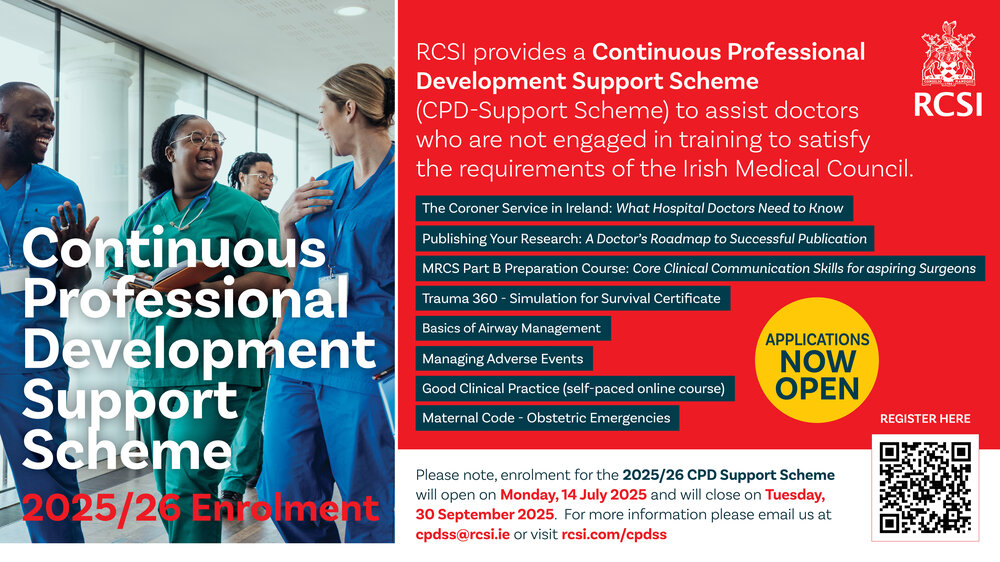
Please share with your network: CPD Support Scheme 2025/26


Please note that enrolment for our 2025/26 CPD Support Scheme is now open.


Please share with your network.


Please note that enrolment for our 2025/26 CPD Support Scheme is now open.


Applications for the support scheme can be submitted here.


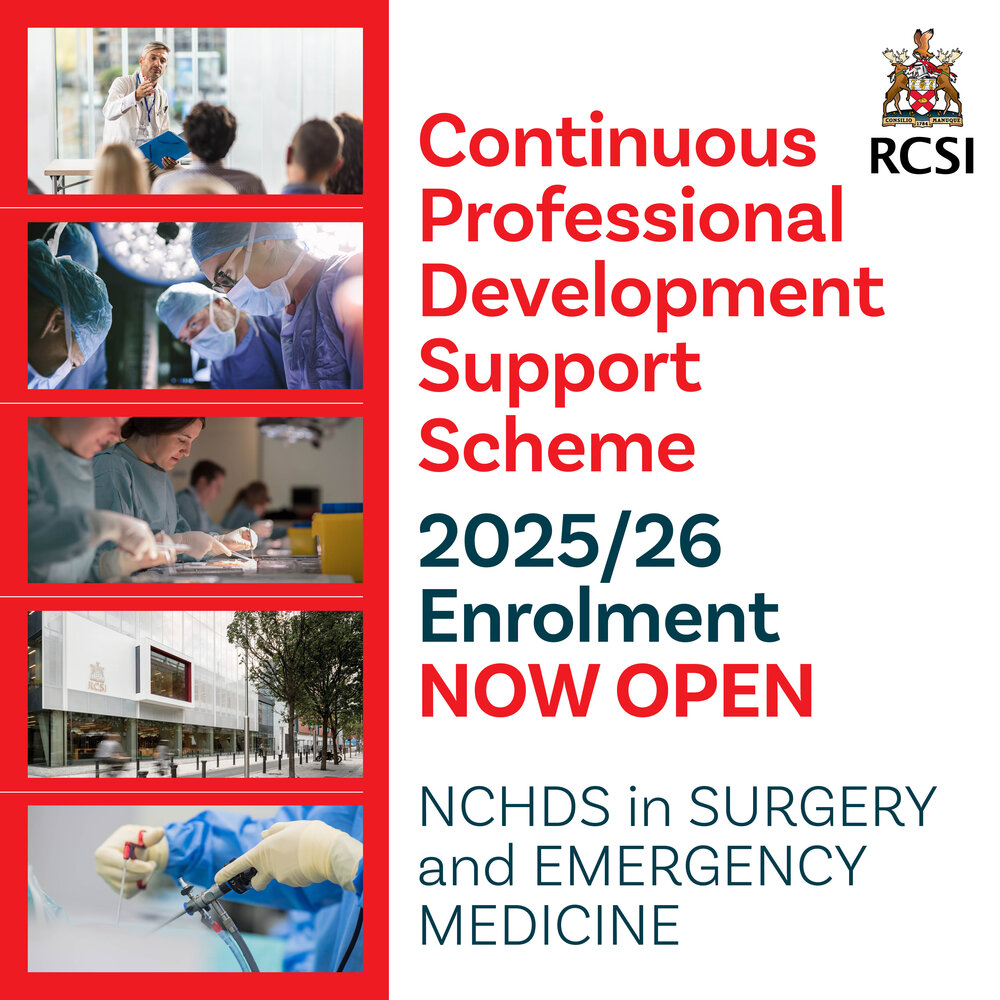
This year’s programme includes a wide range of courses for NCHD's in surgery and emergency medicine including Trauma 360 - Simulation for Survival Certificate, Managing Adverse Events, Core Clinical Communication Skills for Aspiring Surgeons, and more. The programme also includes self-paced online courses, including a new course, Good Clinical Practice, Safe Clinical Handovers, Communication Skills for Video and Telephone Consultations and Medical Science for Surgery and Emergency Medicine.


For more information, please click here or email cpdss@rcsi.ie


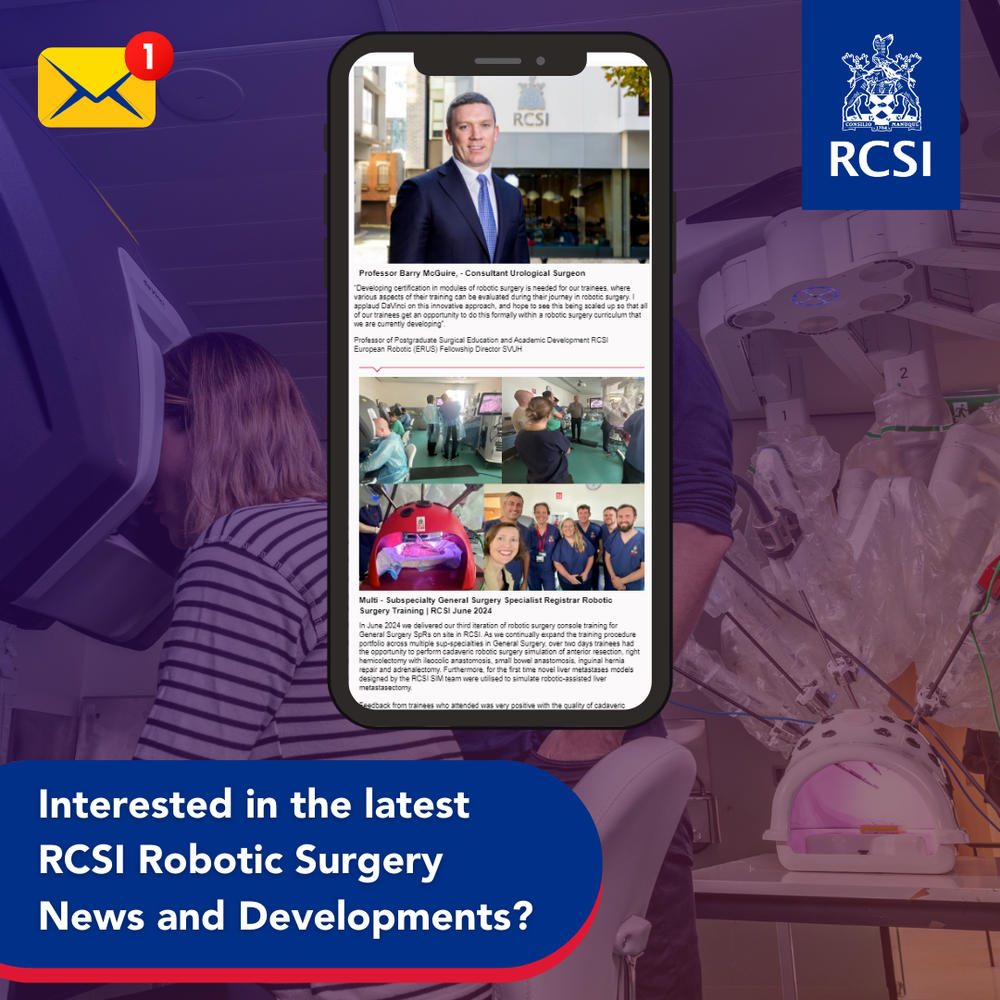
Interested in Robotic Surgery News, Events and Courses
Robotic Surgery News, Events and Courses


Register your interest with the Royal College of Surgeons in Ireland today to join our global robotic surgery community.


Register for RCSI's robotic surgery newsletter, where you will receive regular updates on robotic surgery news, trends, events and courses in robotic surgery.   


For more information, please click here 


XXXIV Waterford Surgical October Meeting (WSOM)
Saturday, 11 October 2025


We are delighted to announce that abstract submissions are now open for the XXXIV Waterford Surgical October Meeting (WSOM), which will take place on Saturday, 11th October 2025 at the Health Sciences Building, South East Technological University (SETU), Cork Road, Waterford.


We are delighted to announce that abstract submissions are now open for the XXXIV Waterford Surgical October Meeting (WSOM), which will take place on Saturday, 11th October 2025 at the Health Sciences Building, South East Technological University (SETU), Cork Road, Waterford.


Theme: Research, Education & Training
Submission Deadline: Friday, 8th August 2025, COB
Submission Guidelines: Please scan the QR code in the flyer below or see the attached image for full submission details.


The final programme and registration details will follow shortly.


Please circulate among your colleagues and departments.


Further information regarding this meeting can be obtained from Ms. Jennie O’Leary, Postgraduate Surgical Administrator, University Hospital Waterford on 051 842684 or by email at jennie.oleary@hse.ie.


Kind regards,

Professor Peter M. Neary MB, MScLHPE, MA, MD, FRCS(Colorectal)

Inaugural Professor and Chair of Surgical Oncology

Academic Head of Department

Consultant General & Colorectal Surgeon

University Hospital Waterford/University College Cork


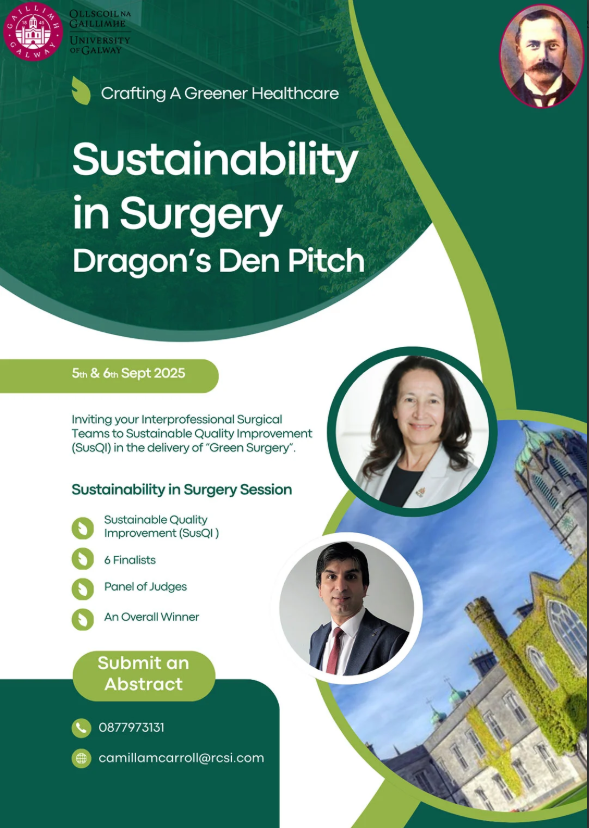
50th Sir Peter Freyer Memorial Lecture & Surgical Symposium


The 50th Sir Peter Freyer Memorial Lecture & Surgical Symposium is taking place Friday 5, and Saturday 6 September 2025.


The 50th Sir Peter Freyer Memorial Lecture & Surgical Symposium is taking place Friday 5, and Saturday 6 September 2025.

The Sir Peter Freyer Memorial Lecture & Surgical Symposium is hosted annually on the first weekend of September by the Department of Surgery, University of Galway. Professor Sean O’Beirn established this conference in 1975 and was succeeded by Professor HF Given. It is currently hosted by Professors Oliver McAnena and Michael Kerin.

It is the largest surgical conference in Ireland and is open to all surgical disciplines both nationally and internationally.

The Sir Peter Freyer Memorial Lecture & Surgical Symposium provides a platform for healthcare professionals to present their research and clinical work and allows for the merging of both scientific and clinical information. Abstracts are published in a supplement to the Irish Journal of Medical Science.

Each year the Sir Peter Freyer Memorial Medal is awarded to the best original research paper (chosen from the Plenary Session). A poster prize is also awarded. Participants at the Sir Peter Freyer Memorial Lecture and Surgical Symposium are eligible for CPD credits.


For more information, please click here