|
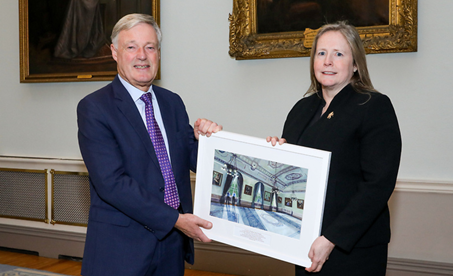
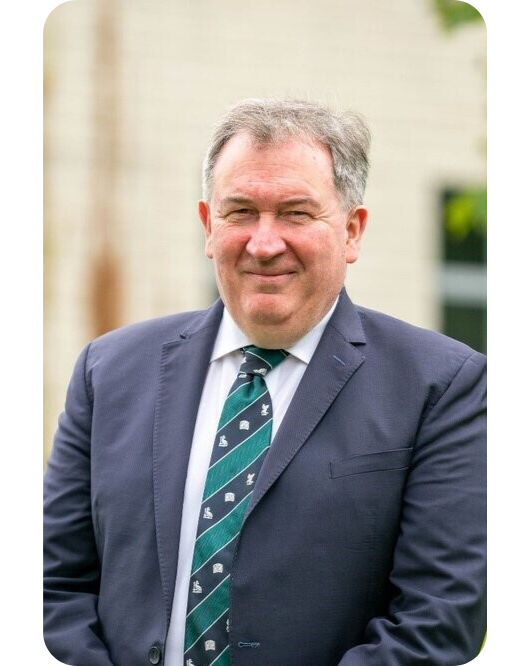
Colleagues gather to celebrate Professor Oscar Traynor
Surgical innovator and educator, Professor Oscar Traynor FRCSI was honoured at a recent reception marking his retirement. We were delighted to have the opportunity to catch up with Prof. Traynor who shared his insights into the evolution of surgical practice and training as well as his ‘to-do’ list for retirement.
*First published in Surgical Bulletin on 11 December 2025
Surgical innovator and educator, Professor Oscar Traynor FRCSI was honoured at a recent reception marking his retirement. We were delighted to have the opportunity to catch up with Prof. Traynor who shared his insights into the evolution of surgical practice and training as well as his ‘to-do’ list for retirement.
Some people retire with no concrete plans for the future, but this certainly isn’t the case for Prof. Oscar Traynor, who already intends to undertake a project close to his heart. “My namesake, my grandfather Oscar Traynor was a revolutionary who took part in the Easter Rising in 1916, the War of Independence and later became a leading Fianna Fáil politician who held the post of Minister of Defence during World War II before later becoming Minister for Justice in the 1950s,” shares Oscar. “He was part of the garrison stationed in the Metropole Hotel beside the General Post Office during the Rising which led to his internment at Knutsford Prison and subsequently Frongoch after the rebellion failed. When he was released, he worked on the printing of the An tÓglach publication during the War of Independence. But when the Civil War broke out, he was once again imprisoned as he was anti-treaty,” Oscar explains. “The fact he was locked up during the Civil War probably was positive in some respects - it smoothed his pathway into politics, first as a Sinn Féin TD but then as a Fianna Fáil member. I like to joke I come from a long line of criminals but I’m really looking forward to researching more and unearthing more stories about my grandfather!”
Rebels aside, Prof. Traynor’s family lineage doesn’t include any doctors or indeed surgeons. “There were no medics in the family and quite frankly, when I was growing up, I didn’t have any aspirations to become a doctor either,” shares Oscar. “All I wanted was to be an airline pilot, and I had my heart set on it. The two options open to me were to join Aer Lingus as a trainee pilot or join the Defence Forces as a cadet. But it just so happened that in 1968 as I prepared to sit my leaving certificate, neither organisation was recruiting.” An off-the-cuff suggestion by a family member led Oscar to apply for medicine - “a case of giving it a go rather than really wanting to study it” he reflects ruefully.
“The first couple of years in the classroom didn’t inspire any real passion for medicine or surgery, but everything changed once I experienced the clinical setting from third year onwards. I loved working with patients and while I enjoyed clinical medicine, surgery really appealed to me. Perhaps it is in part due to my temperament or personality, but I was attracted to the efficiency of surgery – you identify the problem, you address the problem, you solve the problem!”
After graduating from UCD in 1974, Oscar applied to RCSI for what was then known as the Dublin Region Pre-Fellowship Training Programme in Surgery – a precursor to modern-day Core Surgical Training. “I had enjoyed most of the surgical specialties I rotated through but found myself drawn to general surgery. As was the norm those days, after four years of training in Dublin, I went abroad for further training,” he recalls. “I found myself at Hammersmith Hospital in London where I was lucky enough to work under Prof. Les Blumgart, who had recently been appointed Professor of Surgery at the Royal Postgraduate Medical School and a consultant at Hammersmith. Prof. Blumgart is now recognised as one of the world pioneers in HPB surgery and at the time I worked with him he was the only liver surgeon in Ireland and the UK. I was a young, impressionable surgical trainee and found it incredibly exciting – it was truly ground-breaking and cutting-edge. Les became a real mentor to me and really informed my passion for liver, pancreas and complex biliary surgery.”
In 1981, Oscar headed stateside to complete his research year at the Mayo Clinic before returning to Dublin to complete his surgical training. “At this time, liver transplantation was becoming more mainstream in other countries, and I realised that I would need to go abroad again to gain further training in transplantation.” Junior certificate level French did not deter Oscar who set out to Paris where he spent a year training under Prof. Henri Bismuth, who was the first surgeon in France to launch a hepatic transplantation programme. “I persevered with the language before returning to Dublin, where I was appointed as a consultant in St. Vincent’s in the early months of 1987,” shares Oscar.
St. Vincent’s had secured approval from the then Department of Health to establish the first liver transplantation programme in Ireland and Prof. Traynor was tasked with getting the scheme up and running, along with colleagues Mr Gerry Mc Entee and Professor John Hegarty. “It took several years before we were in a position to roll out the programme,” Oscar says. “One of the obvious challenges was ensuring that the team was adequately trained. Given that Irish patients had previously been referred to the UK for transplantations, it made sense for us to send our nurses, doctors, anaesthetists over there for training also. So, in 1990 we established a twinning programme with King’s College Hospital in London and our team members moved over there to train for four, six or sometimes 12 months.”
Prof. Traynor and the team properly launched the programme in 1993, and it went on to become hugely successful – quickly growing to deliver approximately 65 liver transplants per year. “It was a real game-changer," says Oscar “particularly for those patients with end stage liver disease who had often struggled to get a referral abroad. It was an exciting time also as the challenges facing some of the early liver transplants from the 1960s through to the 1980s, specifically rejection of the liver, had been resolved through powerful new immunosuppressant drugs. It’s an interesting surgical specialty because over the years the technique hasn’t changed drastically, but what has changed is perioperative care, intensive care, and the management of rejection and sepsis. The antiviral drugs developed to treat hepatitis C have also had a huge impact.”
Apart from his surgical practice, Prof. Traynor’s pathway into surgical training and education was somewhat serendipitous. “In 1998, my good friend Mr Joe Duignan was elected to RCSI Council. At the time he held the role of Dean of Postgraduate Surgical Training at RCSI, which he had to vacate in order to become a Council member. He kind of casually mentioned the role of Dean to me and suggested I consider applying. It certainly wasn’t part of any grand master plan,” he jokes.
Initially intended as a three-year contract, Prof. Traynor remained in the position – under various title changes up until 2021. “I think they forgot to set the timer!” he laughs. During this period, Prof. Traynor led out on several innovations and achievements, not least the early challenge of consolidating the various independent surgical training schemes into one programme. “Back in 1998, there were six core surgical training programmes in the country. They were independent from each other with no connection, no communication, no common curriculum,” he recalls. “One of my first objectives in the role of Dean was to try and bring these programmes together in an effort to ensure a fairer and more standardised selection process.”
Despite some initial objections, people began to see the merits of one programme. “In particular, I think the trainees understood the benefit of having a national training programme. A major disadvantage of having multiple schemes was that trainees were limited in their ability to network and connect. As a trainee in Galway, you had very little chance of getting a consultant role in Dublin and vice versa. I also think trainees appreciated the national selection process which had very clear criteria.”
Once the national programme had been established, Prof. Traynor set his sights on the creation of a structured education programme in the College. “We started this in 2002 by bringing core surgical trainees into the College for simulation training. Nowadays simulation training is the norm and fully integrated into medical and surgical education, but at the time it was considered a bit off the wall to have SHOs spend six days in a lab in RCSI. However, we got great support from the College and so we set up our first little skills lab on the first floor of 121 St. Stephen’s Green – a far cry from what is available in 26 York Street,” he laughs. “We were extremely fortunate to have very talented surgical skills tutors, the late Mr Brian Lane and Professor Peter Gillen. We had simulation models and virtual reality simulators in the lab and trainees from across the country would attend. While there was initial scepticism it quickly became the norm.”
And so, in 2005 just as simulation training was becoming increasingly mainstream, Prof. Traynor decided to come up with another new idea... Human Factors Training. “I think the general consensus was that I had lost the plot slightly,” he smiles “but, we had really great support from Prof. Arthur Tanner, who was the Head of Surgical Affairs at the time and also from Prof. Ciaran O’Boyle, Professor of Psychology. They really understood the importance of developing our surgical trainees’ soft skills – communication, teamwork, leadership etc.”
Working along with Dr Dara O’Keeffe and subsequently with Dr Eva Doherty, Prof. Traynor helped to lead the roll out of human factors training – a first for any surgical College worldwide. “Once again, as with the consolidation of several training schemes into one national programme, it was the trainees who were the early adopters of the human factors training. They really saw the value and benefit.”
Prof. Traynor also recognises the establishment of the National Doctors Training and Planning (NDTP) group in 2007, as another step in enhancing surgical training. “Up until that point there were no clearly defined structures or frameworks for curriculum development, training and education. The creation of the NDTP was hugely beneficial in that regard,” he reflects.
In 2021, Prof. Traynor’s tenure as Dean ended but he continued as Professor of Postgraduate Surgical Education until August 2023 when he was appointed as Director of International Surgical Training Programmes at RCSI. “It has been hugely enjoyable to work on the international side of things,” shares Oscar. “The trainees who participate in the programme already have had six or seven years of training in their own country and so are already very experienced. Through the programme they get the opportunity to travel here to Ireland to undertake further sub-specialised training, which may not be available in their country. On the flipside the Irish healthcare system benefits from additional experienced manpower at no additional cost.”
In recent weeks, after an incredible and hugely impactful career, Prof. Traynor has stepped down from his role. “I tell people that I kept retiring from all these roles, but like a bad infection, they couldn’t quite get rid of me,” he jokes! Those who attended the recent retirement do in RCSI know that this isn’t the case but, hopefully retirement won’t be the end of his involvement with RCSI as he hopes to continue some teaching and to do some consultancy work if the opportunity arises. Apart from that his time will be spent in the archives, researching his rebel grandfather and who knows, perhaps there might even be time to follow up on the airline pilot license after all!
*First published in Surgical Bulletin on 11 December 2025
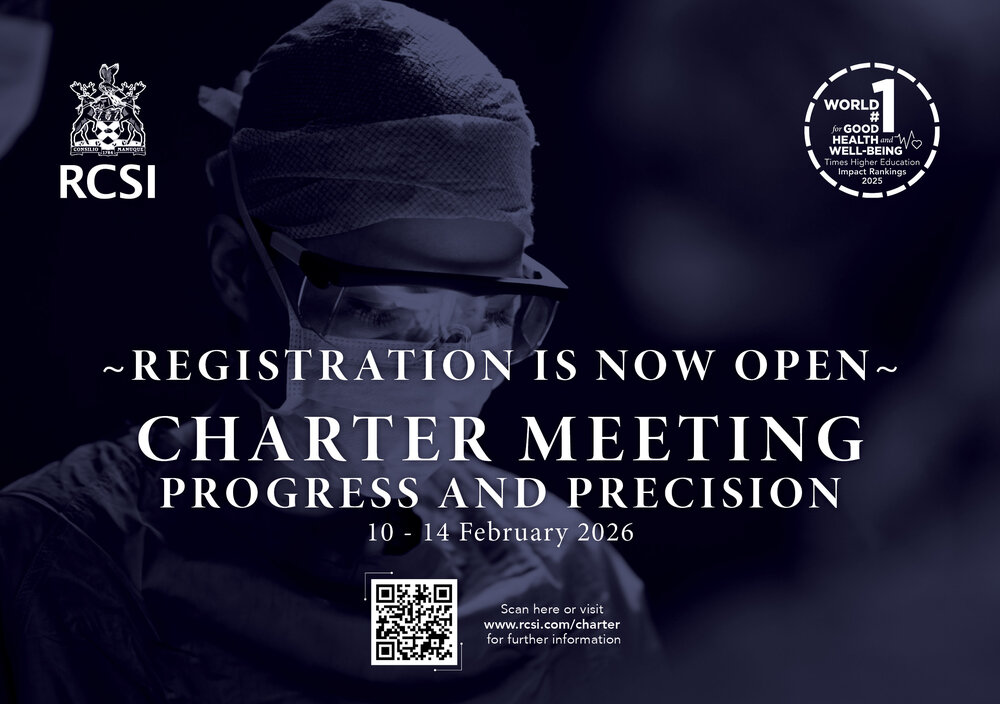
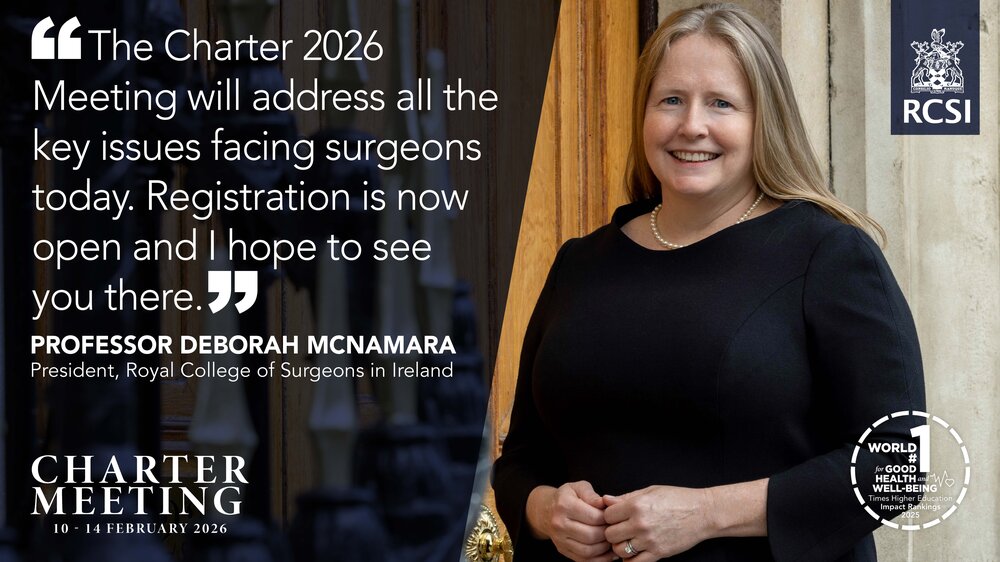
Registrations now open – RCSI Charter Meeting 2026
10-14 February 2026
The Royal College of Surgeons in Ireland is pleased to announce that registrations for the upcoming Charter Meeting from 10-14 February 2026 are now open.
The Charter Meeting programme is also available which outlines all key sessions within the packed agenda of talks.
Theme: Progress and Precision
The Royal College of Surgeons in Ireland is pleased to announce that registrations for the upcoming Charter Meeting from 10-14 February 2026 are now open.
The Charter Meeting programme is also available which outlines all key sessions within the packed agenda of talks.
The theme of this year’s Charter Meeting this year will be on Progress and Precision.
We are delighted to announce the 101st Abraham Colles Lecture taking place on Thursday, 12 February 2026 from 4pm to 4:30pm will be delivered by Professor Ewen Harrison, Professor Surgery and Data Science, Director of Centre for Medical Informatics, University of Edinburgh, Consultant HPB Surgeon, Royal Infirmary of Edinburgh, Deputy Editor, NEJM AI.
Title: Harnessing AI to Improve Surgical Care
Relevant to surgical audiences across different stages of your career, key highlights include our Symposiums (I – V) which will cover a multitude of current topics around Best Practice in Clinical Governance, Next Generation Cancer Care, Preparing the Surgical Workforce for AI, Supporting Early Career Surgeons, and focusing on a Healthier Future.
Other highlights include the launch of the Best Practice in Surgical Clinical Governance Framework, our keynote sessions for our 101st Abraham Colles, Johnson & Johnson, and 33rd Carmichael Lecture, the launch of the Robotic Surgery and Technology Learning Village and Robotic Surgery Curriculum, the Annual health Service Quality Improvement and Innovation Conference, the National Office of Clinical Audit (NOCA) Annual Conference and more. To see our full programme, we recommend reading through our Charter 2026 programme which is available here.
For more information, please visit: www.rcsi.com/charter
Spotlight on Robotic and Technology Learning Surgery Village and Curriculum | RCSI Charter Meeting 2026
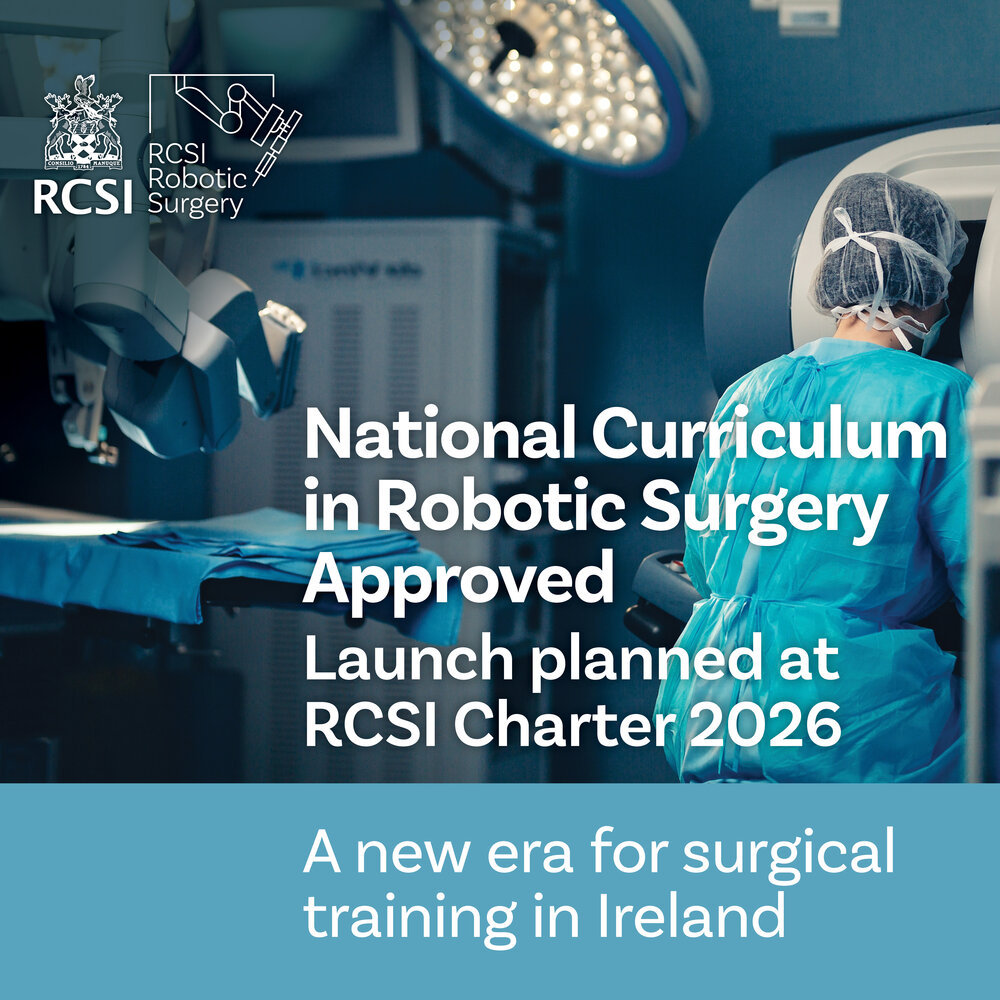
This year’s Robotic & Technology Learning Village at the Charter Meeting marks a major step forward for surgical innovation at RCSI.
An event not to be missed! Thursday, 12 February 2026
This year’s Robotic & Technology Learning Village at the Charter Meeting marks a major step forward for surgical innovation at RCSI.
Building on last year’s success, the village has expanded significantly, offering delegates the chance to get hands-on with multiple next-generation robotic platforms and emerging technologies. It will also coincide with the launch of the new National Robotic Surgery Curriculum and the announcement of three dedicated training platforms.
Robotic Platforms confirmed:
- Da Vinci 5, Intuitive
- Hugo, Medtronic
- Sentry, Cornerstone
- Versius, MED Surgical/CMR
- Symani Surgical System, MMI (Microsurgery Robot)
- Velys, J&J (Orthopaedic Robot)
Vendors will have time slots for trials whereby links will be confirmed upon registration.
More information to come in due course!
To learn more, please visit: https://www.rcsi.com/dublin/news-and-events/events/event/2026/charter-meeting-2026

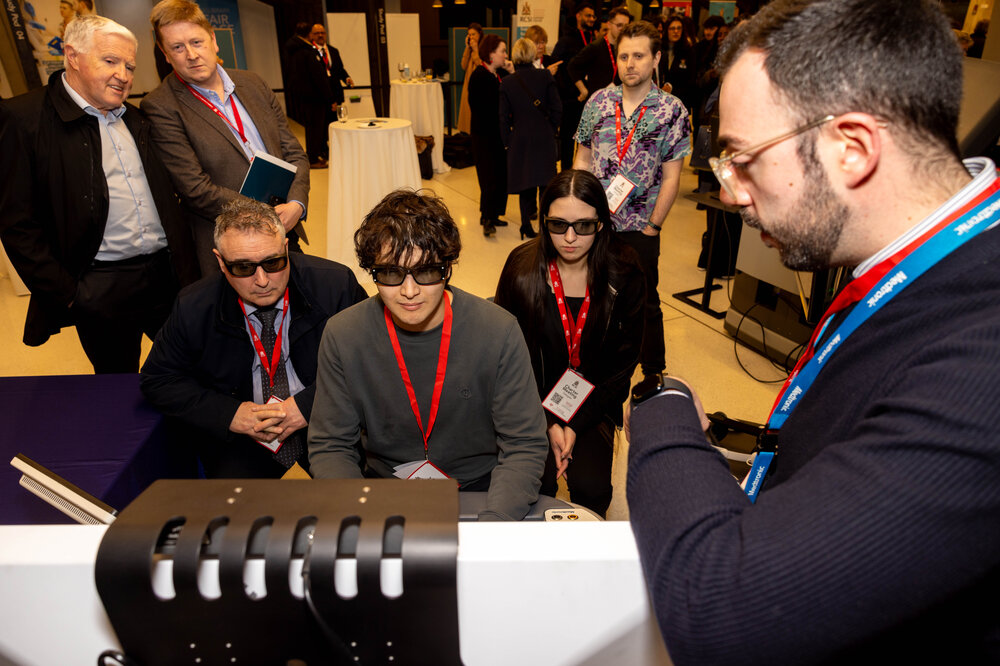
The Early Career Surgical Network (ECSN)
The Early Career Surgical Network (ECSN) held an in-person event at the RCSI on Friday 5th December, this was an opportunity for newly appointed surgeons to hear from experts in the field.
For further information on the Early Career Surgical Network” please email ecsn@rcsi.com
The Early Career Surgical Network (ECSN) held an in-person event at the RCSI on Friday 5th December, this was an opportunity for newly appointed surgeons to hear from experts in the field. The event focussed on a number of issues including the practicalities of getting started in a consultant practice, including setting professional goals.
The event speakers included consultants and experts in different fields providing advice and direction on how to begin to change culture and managing relations both professional and personal.
For further information on the Early Career Surgical Network” please email ecsn@rcsi.com
RCSI’s Advanced Train the Trainer Course
Apply Today
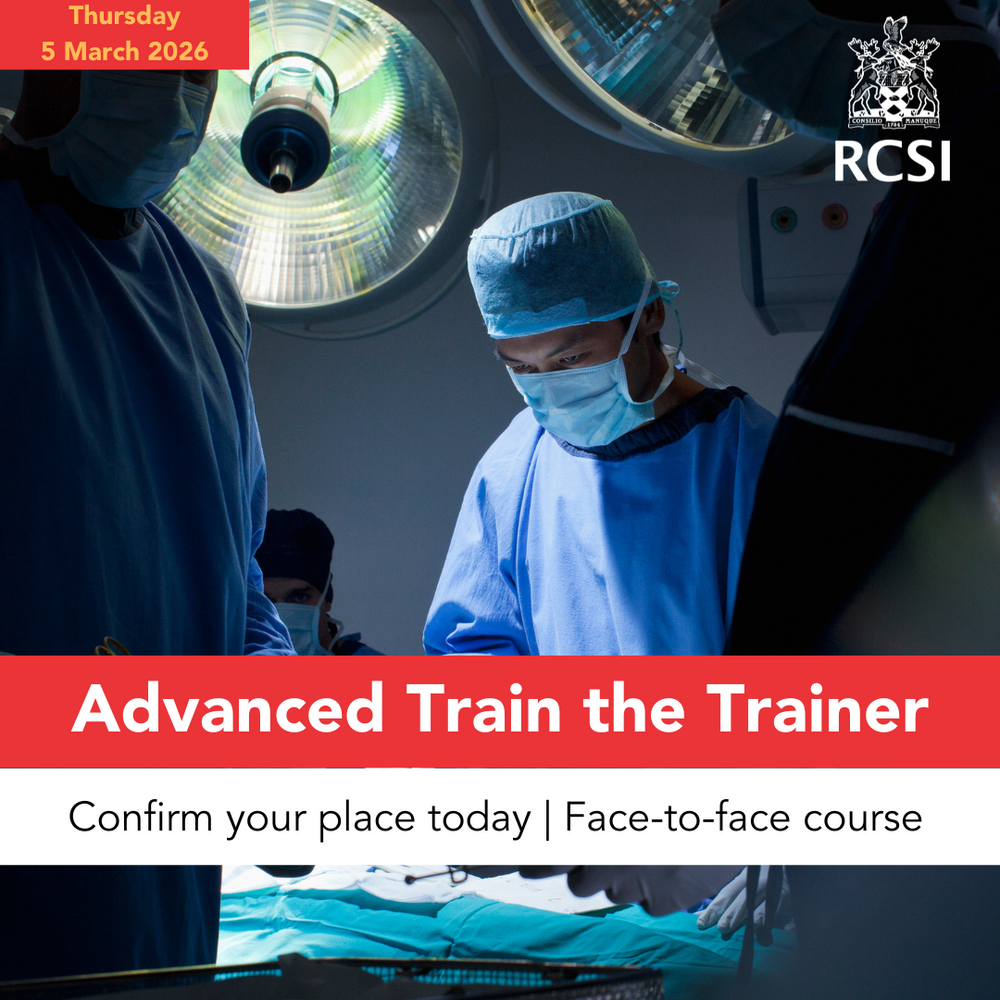
Applications are now open for RCSI’s Train the Trainer Masterclass: Giving Feedback on Performance which will take place on Thursday, 5 March 2026.
Register today - RCSI’s Advanced Train the Trainer Course
Date: Thursday, 5 March 2026
Suitable to: Surgical and Emergency Medicine Consultants in practice in Ireland
Location: RCSI 26 York Street
Course lead:
- Dr Dara O’Keeffe, Simulation lead in Postgraduate Surgical Education
Applications are now open for RCSI’s Train the Trainer Masterclass: Giving Feedback on Performance which will take place on Thursday, 5 March 2026.
Programme Flyer
Feedback is an essential part of education and training programmes and helps trainees maximise their potential at different stages, raises their awareness of strengths and areas for improvement, and identifies actions to be taken.
This course will provide participants with the skills to deliver effective feedback in the clinical environment.
Fee: €200
To register, please visit: https://www.rcsi.com/online/find-a-course/cpd/a/d/consultant-masterclass-advanced-train-the-trainer
Kind regards,
Royal College of Surgeons in Ireland
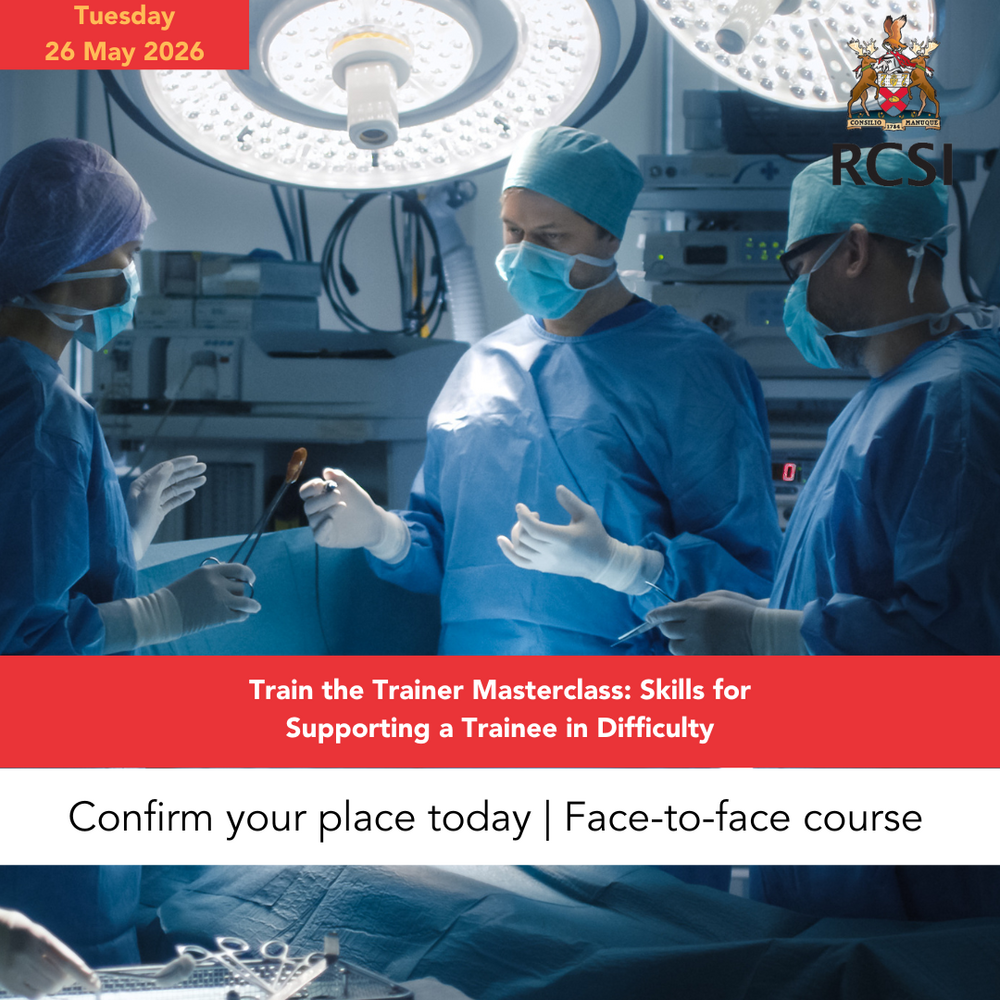
Advanced Train the Trainer Masterclass: Skills for Supporting Trainees in Difficulty
Apply Today
Applications are now open for Advanced Train the Trainer Masterclass: Skills for Supporting Trainees in Difficulty which will take place on Tuesday, 26 May 2026.
Date: Tuesday, 26 May 2026
Time: 10am – 4:30pm
Suitable to: Surgical and Emergency Medicine Consultants in practice in Ireland
Location: RCSI 26 York Street
Course lead:
- Dr Dara O’Keeffe, Simulation lead in Postgraduate Surgical Education
Applications are now open for Advanced Train the Trainer Masterclass: Skills for Supporting Trainees in Difficulty which will take place on Tuesday, 26 May 2026.
This one-day module is designed to equip trainers with the skills necessary to effectively support trainees facing personal or professional challenges.
Participants will gain a comprehensive understanding of the supports and resources available to both trainers and trainees, and will have the opportunity to develop and refine the skills needed to navigate complex and sensitive interactions with confidence and professionalism.
Fee: €200
To register, please visit: https://www.rcsi.com/online/find-a-course/cpd/t/r/consultant-masterclass-supporting-trainees-in-difficulty
For any queries, please email cpdss@rcsi.ie
Kind regards,
Royal College of Surgeons in Ireland
Have your say. Complete the Wellbeing 2 Survey Today!
Calling all Consultants, Trainees and NCHDs working in Irish hospitals! You are invited to take part in Wellbeing 2: A National Study of Wellbeing of Hospital Doctors in Ireland.
Calling all Consultants, Trainees and NCHDs working in Irish hospitals! You are invited to take part in Wellbeing 2: A National Study of Wellbeing of Hospital Doctors in Ireland.
Wellbeing 2 is a national cross-sectional study examining the wellbeing of hospital doctors in Ireland, ten years after the First National Wellbeing Study carried out in 2014.
Sponsored by the Royal College of Physicians of Ireland, and supported by all postgraduate training bodies, Wellbeing 2 wants to measure the personal and workplace wellbeing of hospital doctors and compare results to the original study, in addition to taking into account the significant changes in the healthcare landscape over the last 10 years.
What’s involved?
- The survey takes approximately 15 minutes to complete.
- All responses are anonymous and confidential.
- Participants will receive one CPD credit on completion of the questionnaire.
- Participants will have the chance to win one of 3 X €500 SWIRL® pre-paid debit cards
Participation Information Leaflet
By completing the questionnaire, you will help shape the next phase of wellbeing policy and supports for doctors in Ireland.
To get involved, please visit: https://rcpi.qualtrics.com/jfe/form/SV_2tmZQ0TUZBCrogK
For more information, please visit: https://www.rcpi.ie/Learn-and-Develop/Trainee-Wellbeing/Wellbeing-2
Kind regards,
Royal College of Surgeons in Ireland
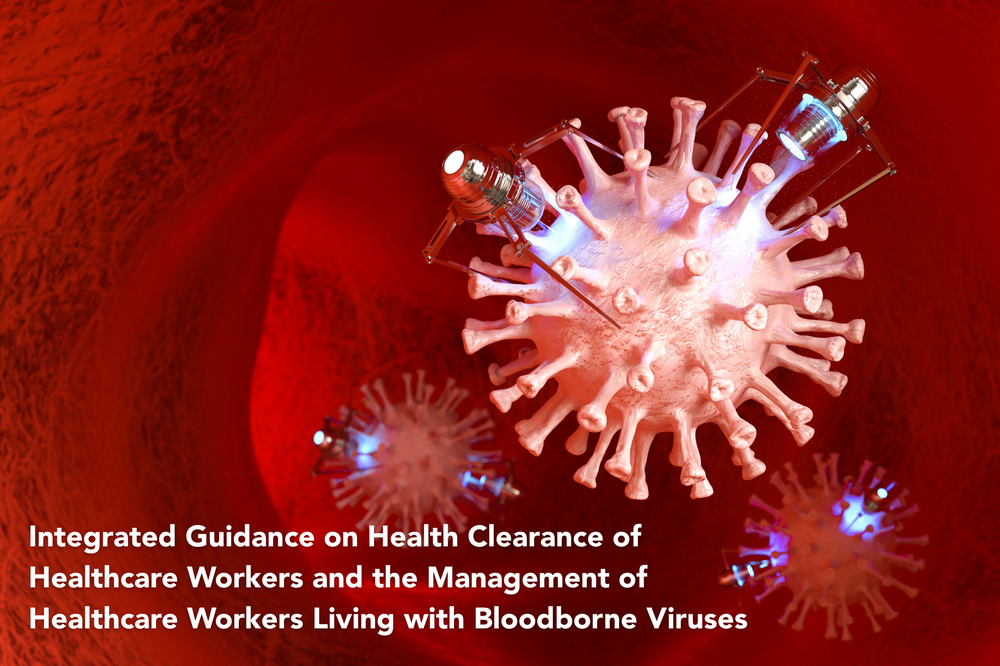
Integrated Guidance on Health Clearance of Healthcare Workers and the Management of Healthcare Workers Living with Bloodborne Viruses
Integrated Guidance on Health Clearance of Healthcare Workers and the Management of Healthcare Workers Living with Bloodborne Viruses (Hepatitis B, Hepatitis C and HIV).
• Integrated Guidance on Health Clearance of Healthcare Workers and the Management of Healthcare Workers Living with Bloodborne Viruses (Hepatitis B, Hepatitis C and HIV). Available here: https://www.hpsc.ie/a-z/bloodbornevirus/BBVinHCWsGuidance.pdf
This document is replacing the 2005 guidance document ‘The Prevention of Transmission of Blood-Borne Diseases in the Health-Care Setting.’
N.B. All previous versions of these documents are now superseded and considered obsolete. Users are advised to discard any printed copies of earlier versions and ensure they are referencing the current version(s).
If you are not seeing the most up-to-date version of the guidance, please try refreshing your browser or clearing your browser cache.
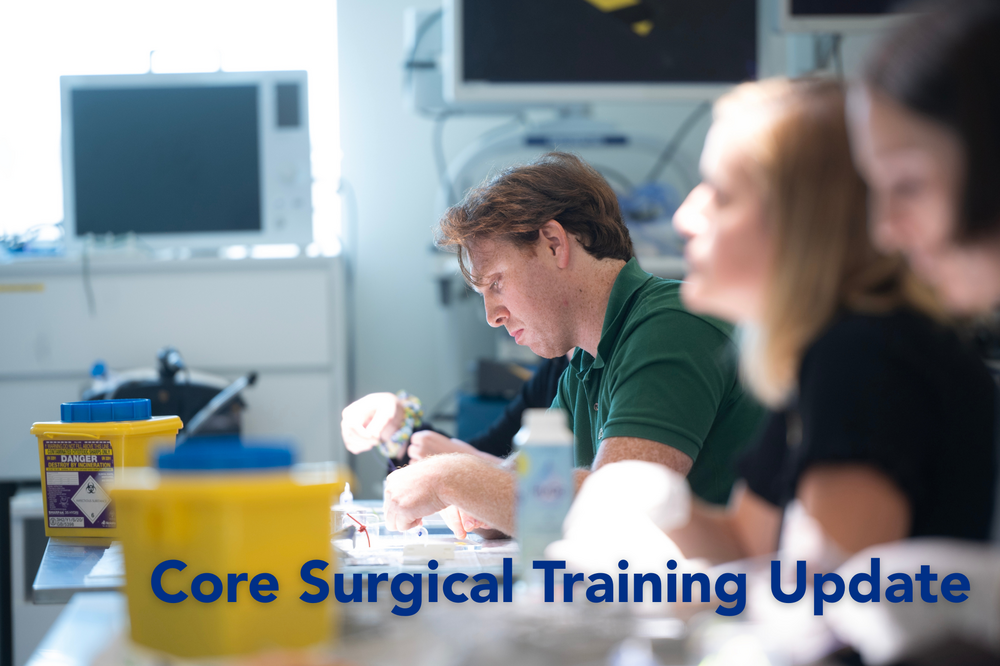
Core Surgical Training Update
Core Surgical Training Applications for 2026 intake closed on Tuesday 11th November with 510 submitted applications (up from 487 in 2025).
Core Surgical Training Applications for 2026 intake closed on Tuesday 11th November with 510 submitted applications (up from 487 in 2025). Surgical Aptitudes took place in person this year in Dublin and Melbourne. Eligibility checks and centile scoring are currently ongoing. The 2026 intake marks a return to in person interviews, to held in RCSI on Tuesday 24th & Wednesday 25th of February, with 100 slots to be filled.
The process of competitive progression from ST1 to ST2 will take place over January to March 2026 with 10 specialties on offer to trainees in year two. The winter Continuous Assessment and Performance Appraisal (CAPA) process will take place across December and January.
|
|
A Christmas message from Professor Kevin Barry
As we come to the end of another year, I would like to extend my sincere thanks to you for the professionalism, dedication and leadership you continue to demonstrate in your role as surgical trainers. Your commitment to shaping the next generation of surgeons is an invaluable contribution to the future of surgical care in Ireland.
As we come to the end of another year, I would like to extend my sincere thanks to you for the professionalism, dedication and leadership you continue to demonstrate in your role as surgical trainers. Your commitment to shaping the next generation of surgeons is an invaluable contribution to the future of surgical care in Ireland.
The example you set—through your clinical expertise resonates deeply with trainees and influences their development as safe, skilled, and thoughtful surgeons.
This year saw an increase in the number of trainees beginning their training journey and there continues to be a strong interest in pursing a surgical career, which is a positive indicator for the specialties. It suggests that the future healthcare needs of patients will be met by a new generation of well-training and motivated surgeons.
Thank you once again for your dedication throughout the year. Wishing you and your family a peaceful Christmas and every good wish for the year ahead.
|
Calling all Surgical Consultants
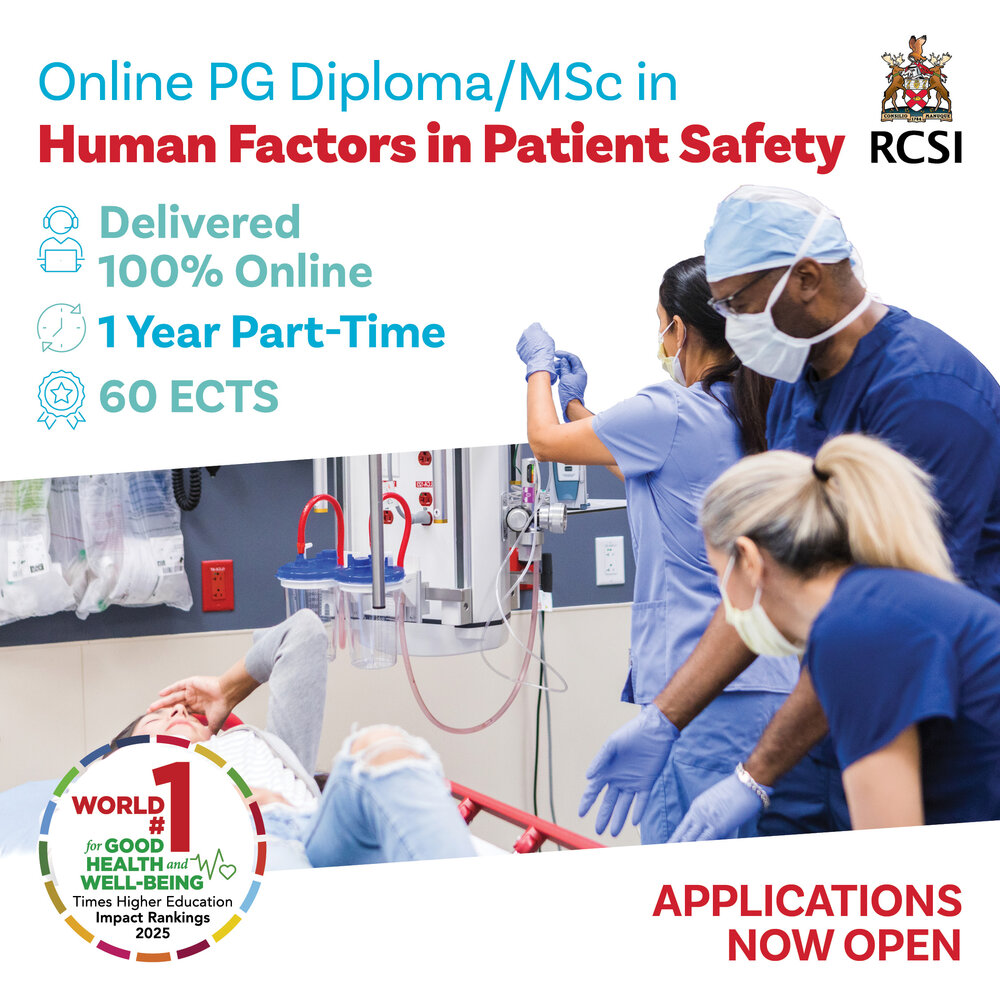
Online PG Diploma/MSc in Human Factors in Patient Safety - Applications Now Open
Applications for our flexible part-time, inter-disciplinary and online PG Diploma/MSc in Human Factors in Patient Safety are now open for September 2026 intake.
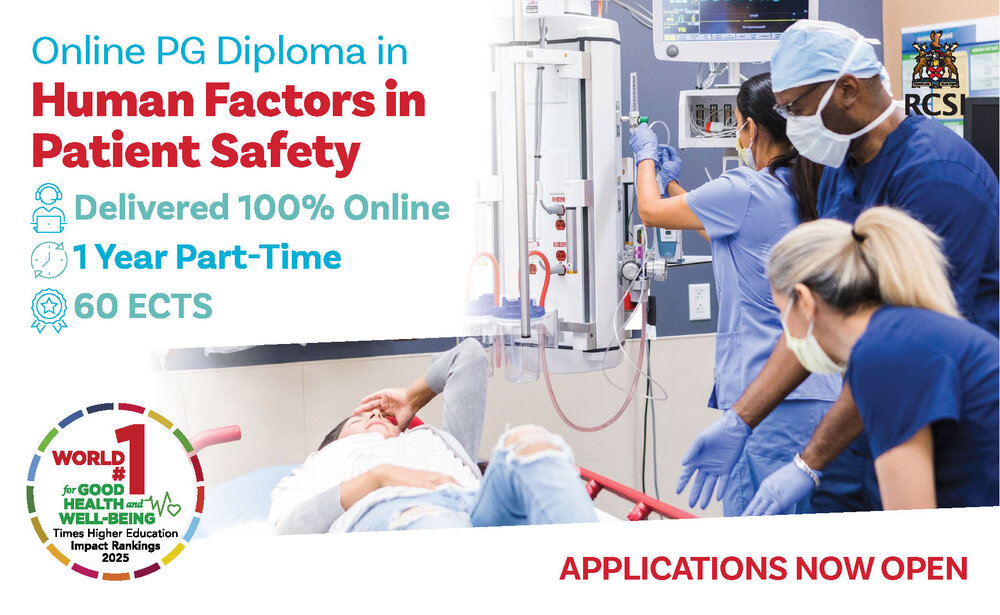
Applications now open - Online PG Diploma/MSc. in Human Factors in Patient Safety - September 2026 intake - Please share with your network.
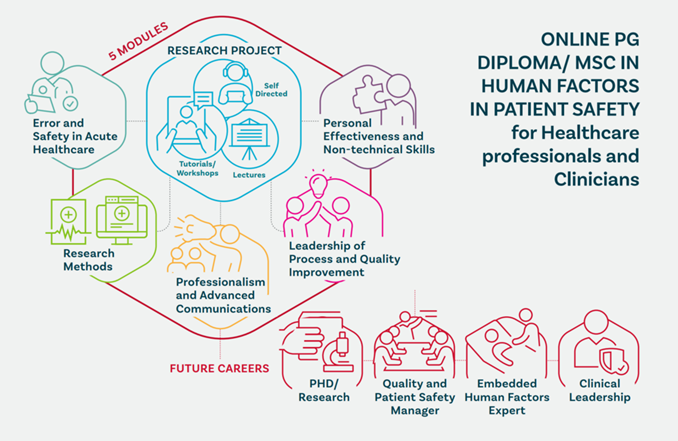
RCSI's Human Factors in Patient Safety programme provides a greater awareness of risk and error in the workplace by providing participants with skills required to mitigate risk and prevent adverse outcomes.
Our flexible online programme also offers access to an interprofessional team of experts in surgery, psychology, nursing, pharmacy and the related fields of medical ethics, medical litigation, leadership, professionalism and communication, amongst others.
Scholars will attend online interactive sessions and workshops one day per month. The rest of the multi-disciplinary programme including didactic teaching, discussion boards, reading, and resources are offered online, which you can access it in your own time.
If you have any questions, please email us at PostgradSA@rcsi.ie
Click here to start your application.
We look forward to hearing from you,
Best wishes
Human Factors in Patient Safety Team
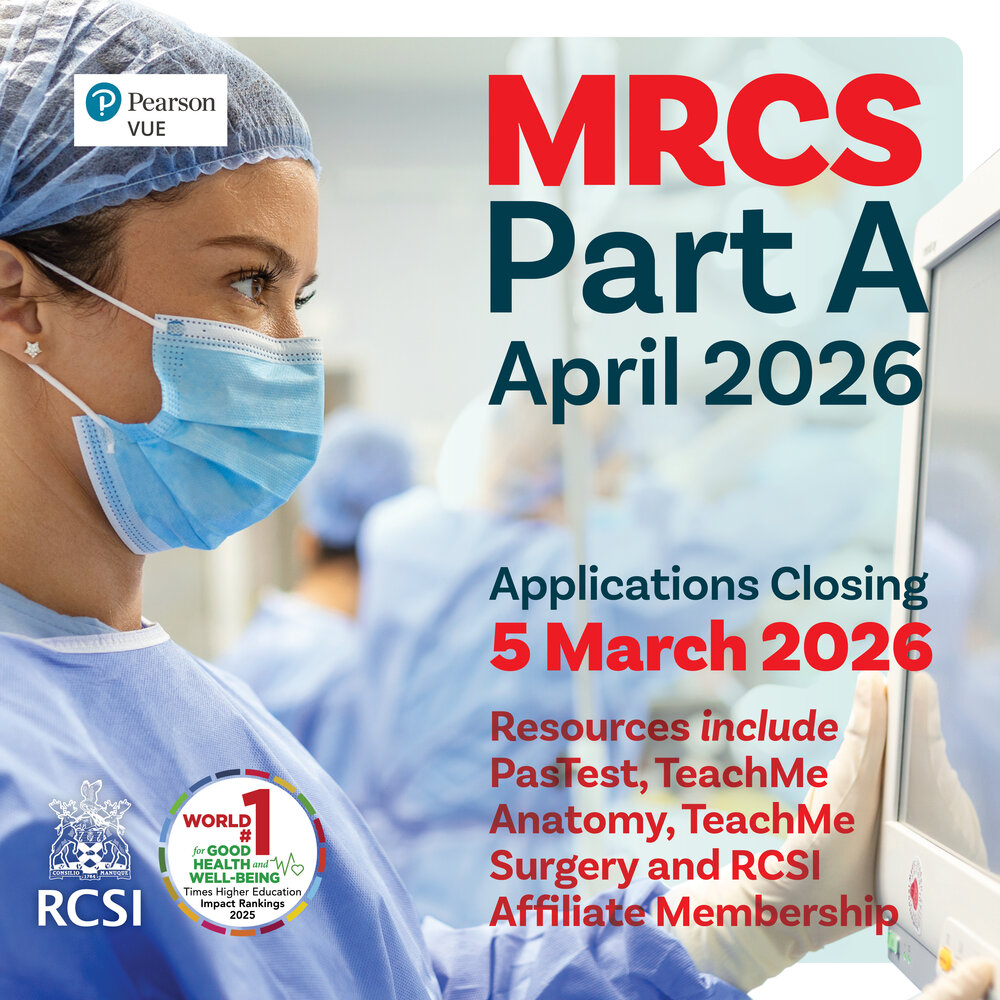
Applications now open – MRCS Part A April 2026
Applications for the next MRCS Part A examination in April 2026 is now open whereby candidates can sit the MRCS Part A examination with the Royal College of Surgeons in Ireland worldwide via Pearson VUE.
Applications now open – MRCS Part A April 2026
Applications for the next MRCS Part A examination in April 2026 is now open whereby candidates can sit the MRCS Part A examination with the Royal College of Surgeons in Ireland worldwide via Pearson VUE.
RCSI is committed to supporting the career development of aspiring surgeons worldwide, we provide a range of supports and resources to help you prepare for the MRCS examinations, including free access to our Affiliate Membership which includes over 100 MRCS specific resources, 15% off PasTest resources for MRCS Part A and access to TeachMe, providing MRCS candidates sitting MRCS Part A with RCSI free access to TeachMe Surgery and TeachMe Anatomy (including both question banks with over 2000+ MCQs combined),
For more information, please click here.
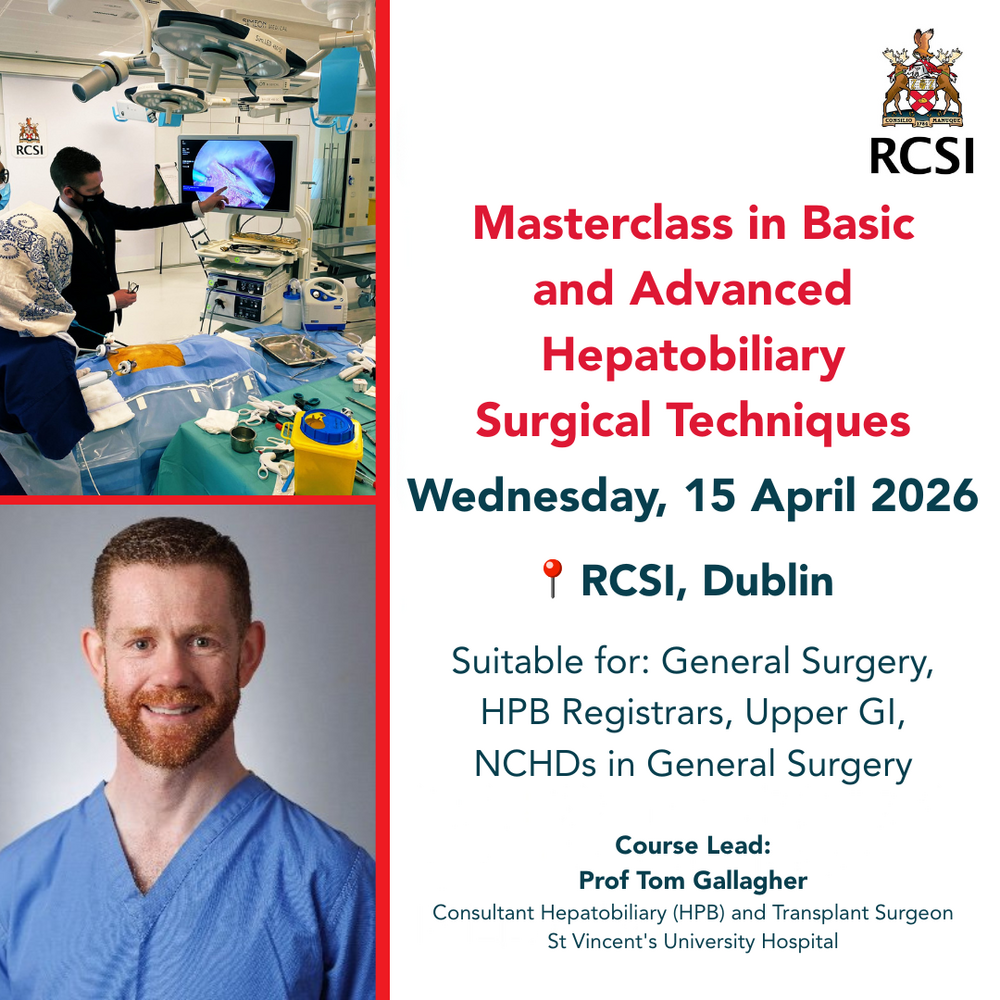
Masterclass in Basic and Advanced Hepatobiliary Surgical Techniques
Wednesday, 15 April 2026
Join RCSI on Wednesday, 15 April 2026 for our Masterclass in Basic and Advanced Hepatobiliary Surgical Techniques aimed at HPB Registrars, General Surgeons and Surgical NCHDs who have completed at least two years of surgical training.
Join RCSI on Wednesday, 15 April 2026 for our Masterclass in Basic and Advanced Hepatobiliary Surgical Techniques aimed at HPB Registrars, General Surgeons and Surgical NCHDs who have completed at least two years of surgical training.
This course is being led by Professor Tom Gallagher, Consultant HPB Surgeon in St Vincent's University Hospital. The course will include short didactic sessions in combination with
- Intra-operative video
- Laparoscopic surgical techniques
- Open HPB surgical techniques
The main focus of the masterclass will be on hands-on simulation which will be proctored by experienced HPB surgeons.
The hands-on sessions will give attendees an introduction to both advanced and basic HPB procedures including Laparoscopic cholecystectomy and Laparoscopic liver resection.
For any queries, please email cpdss@rcsi.ie or visit: https://www.rcsi.com/dublin/professional-cpd/cpdss/introduction-to-hepatobiliary-surgical-techniques/course-details
Kind regards,
RCSI Surgery
The annual ISTG Careers Day and Aspiring Surgeons Research event
The annual ISTG Careers Day and Aspiring Surgeons Research event took place on the 15th November 2025 at RCSI St Stephens’ Green.
The annual ISTG Careers Day and Aspiring Surgeons Research event took place on the 15th November 2025 at RCSI St Stephens’ Green. This annual event was very well attended with over 100 students and core trainees attending to hear from experienced surgeons in the different specialties and also have the opportunity to meet with current higher specialist trainees about their training journey.
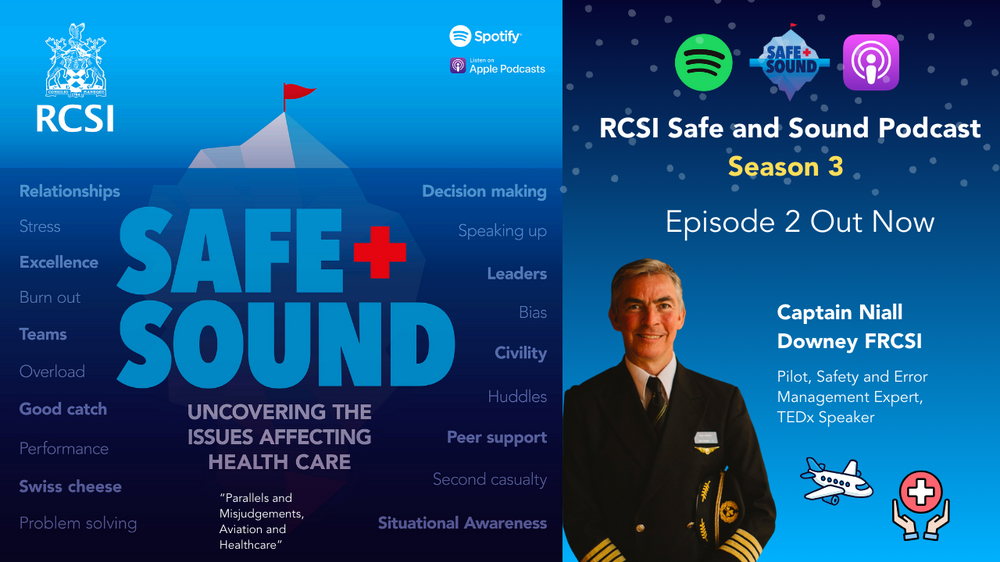
Season 3, Episode 2 Out Now – Parallels and Misjudgements, Aviation and Healthcare - Captain Niall Downey FRCSI
RCSI is delighted to announce that we are back with Episode 2, featuring Captain Niall Downey FRCSI, Pilot, Safety and Error Management Expert, TEDx Speaker, of our Safe and Sound podcast. With a high number of listeners from across different countries and specialties, Season 3 will again provide a spotlight on key pillars within the ecosystem of Human Factors in Patient Safety
Season 3, Episode 2 Out Now – Parallels and Misjudgements, Aviation and Healthcare - Captain Niall Downey FRCSI
RCSI is delighted to announce that we are back with Episode 2, featuring Captain Niall Downey FRCSI, Pilot, Safety and Error Management Expert, TEDx Speaker, of our Safe and Sound podcast. With a high number of listeners from across different countries and specialties, Season 3 will again provide a spotlight on key pillars within the ecosystem of Human Factors in Patient Safety
Episode 2, Season 3 of our RCSI Safe and Sound Podcast “Parallels and Misjudgements, Aviation and Healthcare” featuring Captain Niall Downey Pilot, Safety and Error Management Expert, TEDx Speaker is OUT NOW.
RCSI's latest podcast episode was hosted by Dr Fardod O’Kelly, RCSI Safe and Sound Podcast Host and Senior Lecturer in Surgical Education.
Available on Spotify and Apple podcasts, we are delighted to announce that the Season 3, Episode 2 is now available to listen on the below audio channels:
Kind regards,
RCSI Human Factors in Patient Safety Academy
|
|
|