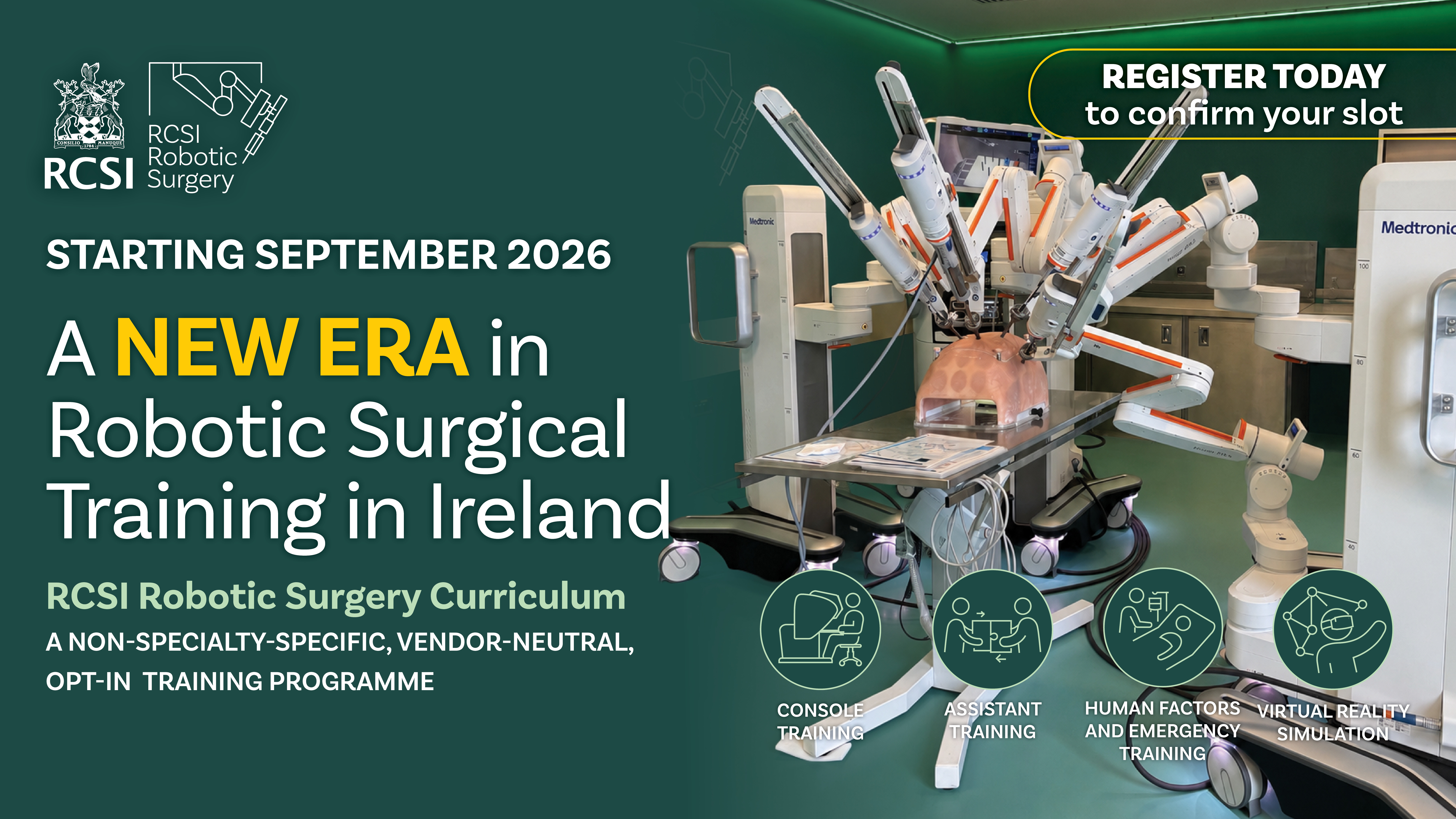
The Royal College of Surgeons in Ireland (RCSI) has developed the RCSI Robotic Surgery Curriculum—a non-specialty-specific, vendor-neutral, opt-in training programme that provides a structured, modular pathway for developing core robotic surgery competencies. The curriculum is designed to be flexible and accessible, enabling trainees from all surgical specialties to undertake robotic training without requiring formal integration into their specialty curriculum.
The curriculum follows a structured, modular pathway that enables trainees to progressively develop the knowledge, technical skills, and non-technical skills required for robotic surgery. It combines online learning, virtual reality simulation, hands-on practical training, human factors education, independent simulator practice, and competency-based assessment across three sequential modules.
The curriculum comprises the following core components:
Online Learning: Completion of the online foundations programme, providing the theoretical principles of robotic surgery, patient safety, instrumentation, technology, and operating room workflow.
Virtual Reality (VR) Simulation: Completion of a structured programme of simulator exercises to develop core robotic skills and achieve the foundational competencies required for progression through the curriculum.
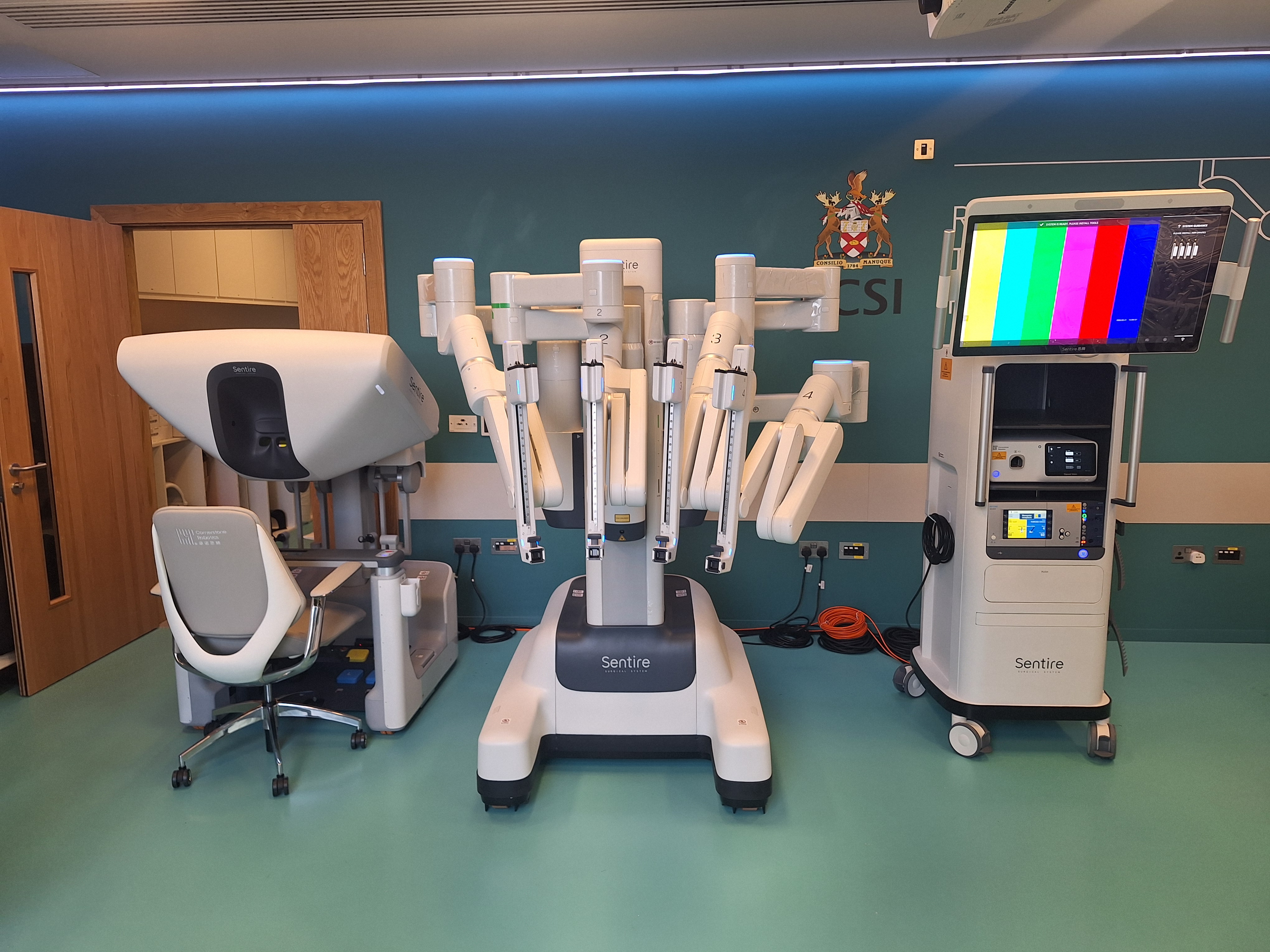
Robotic Bedside Assistant Training: Practical training in patient positioning, robotic system setup, docking, instrument exchange, troubleshooting, and safe operating room workflow.
Basic Console Skills Training: Hands-on training using hydrogel and synthetic simulation models to develop core console skills, including camera control, clutching, instrument handling, dissection, energy application, and suturing.
Human Factors and Emergency Training: Focused training in communication, situational awareness, teamwork, emergency undocking, and crisis management within the robotic operating environment.
Independent Simulator Practice: Completion of a prescribed number of independent simulator hours between modules to consolidate technical skills and demonstrate ongoing progression.
Competency-Based Assessment: Structured assessment throughout the curriculum to ensure participants achieve the required standards before progressing to subsequent modules and successful completion of the certificate.

 Like
Like